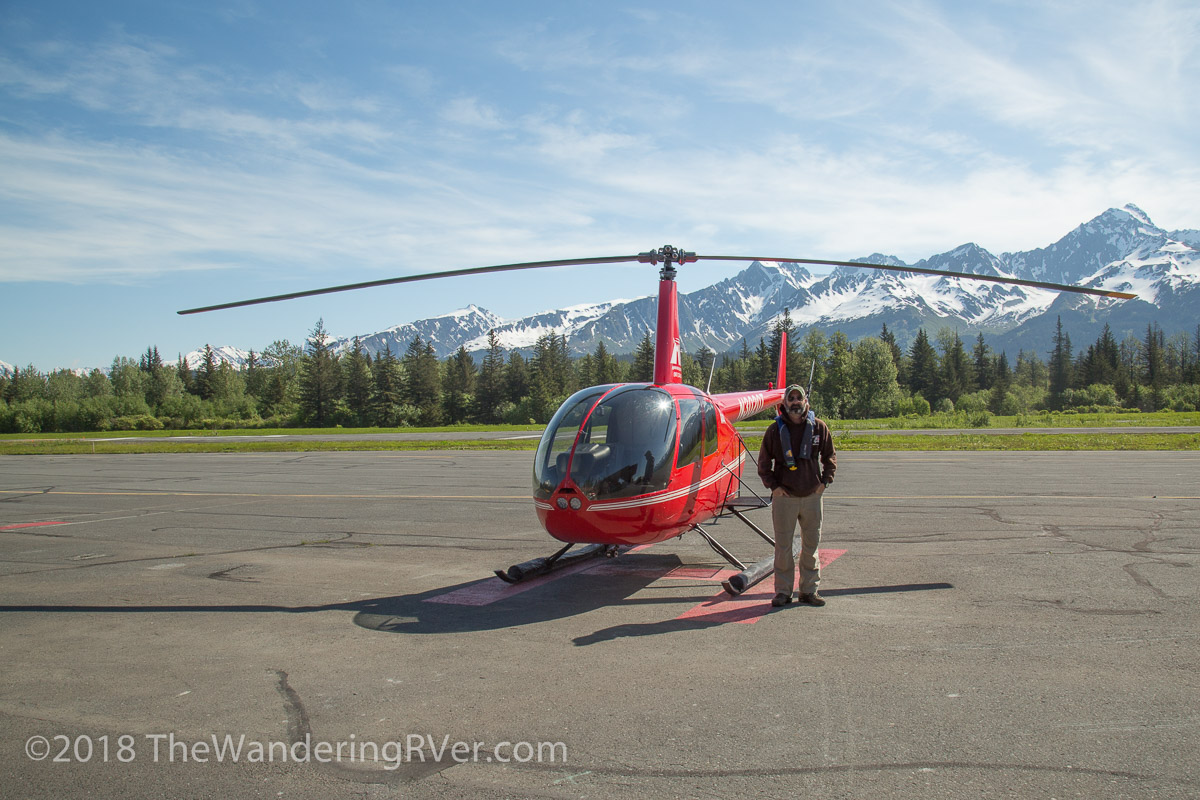
Our adventurous side was calling and Marathon Helicopter Tours answered! We’d seen Resurrection Bay up close on our glacier cruise, but seeing it from the air was an entirely different experience.We checked into their office at the airport, received our safety briefing and were soon ready to take to the air. Our pilot, Mike, has been flying helicopters since 2006 and moved to Seward in 2012. He clearly loves what he does! As we lifted off, he pointed out various Seward landmarks, giving a running commentary on the landscape…
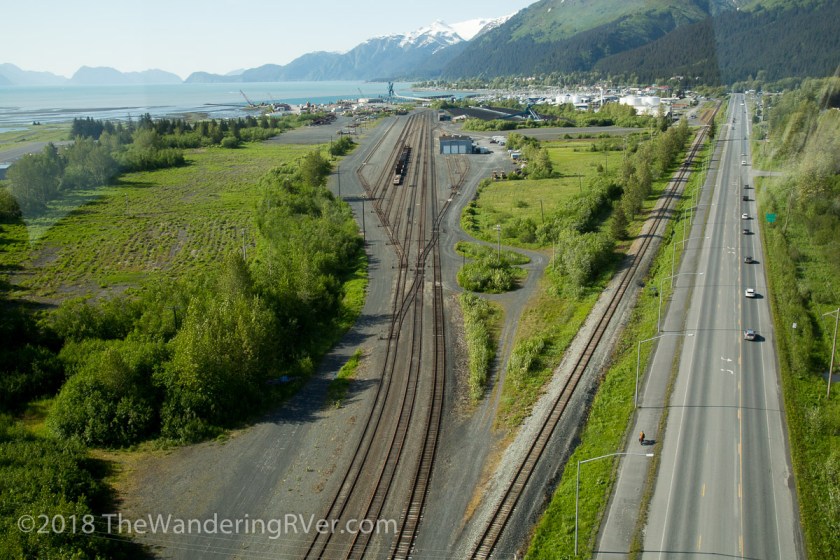
We hugged the shoreline as he told us how the 1964 earthquake forever changed the face of Seward (and all of southern Alaska).
We flew over some kayakers enjoying the first sunny day we’d had in a while…
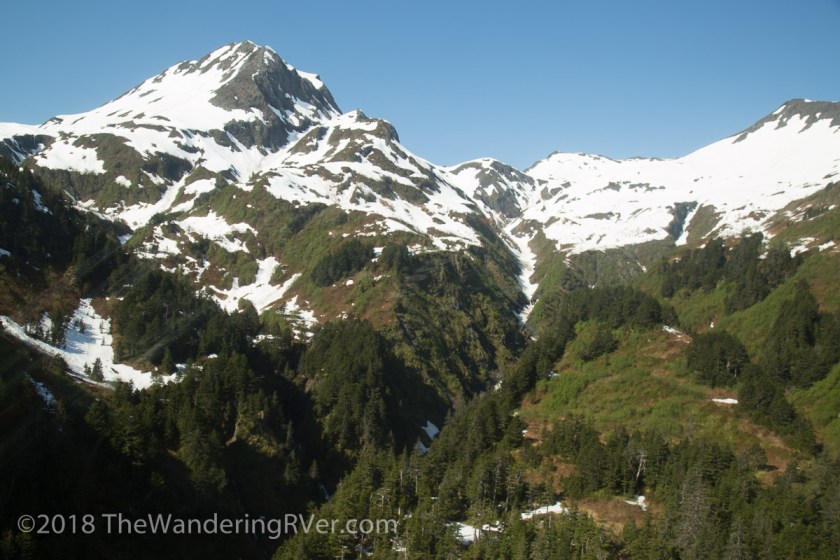
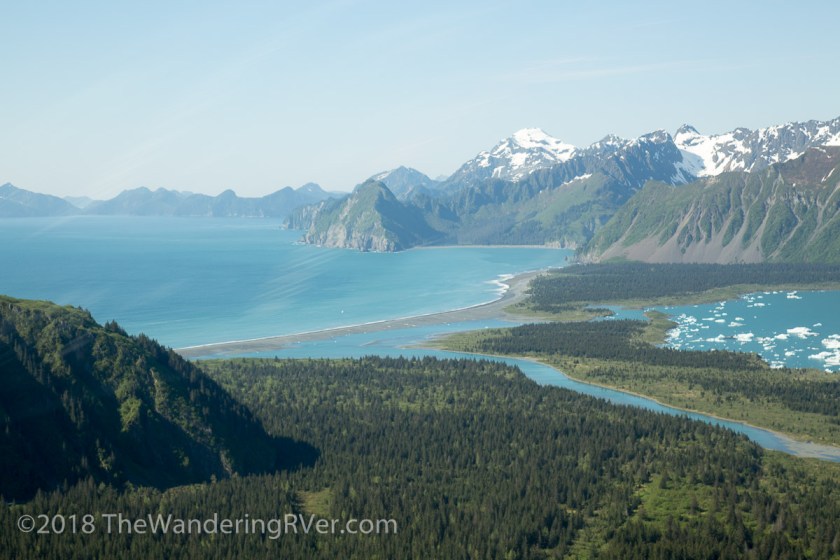
Soon, we made our way up into the mountains, with stunning views of Resurrection Bay for contrast…
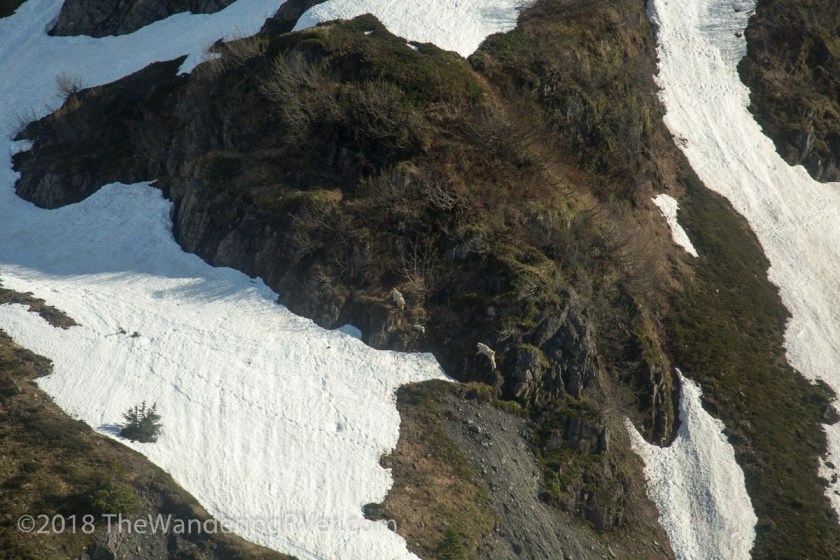
We saw mountain goats, deftly crossing the rocky outcroppings…
As the mountains gave way, we got our first look at Bear Glacier and its bay…
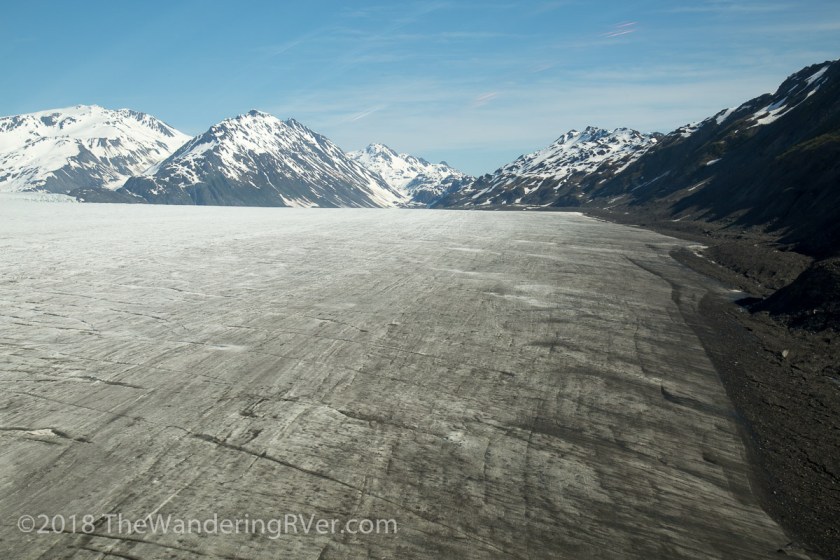
With a practiced ease, Mike swung his flying machine towards the glacier, giving us a close-up view of its beauty…
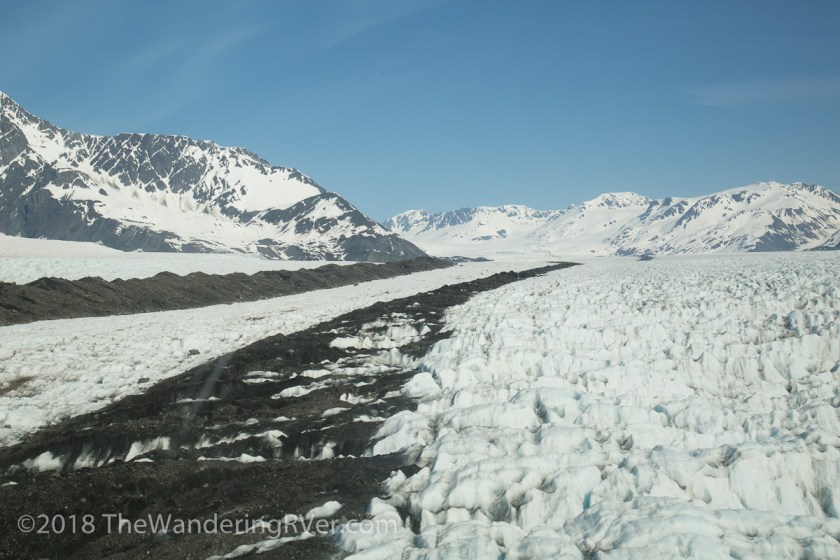
Mike explained the ridge of dirt on the glacier is a medial moraine. A moraine is the accumulation of dirt and debris on an icefield. When it is on the edge of the glacier, it’s called a lateral moraine and when 2 glaciers combine, their edges become the middle and a medial moraine is formed…
As we flew near the edge of the glacier, we could see the lateral moraine forming…
The landscape seemed other-worldly, as if Mike had transported us to another planet…
As we crossed into the airspace over Kenai Fjord National Park, we were treated with the sights of glacial lakes and rivers…
Mike’s in depth knowledge and humorous commentary is only surpassed by his ability to spot wildlife far below of the forest floor…
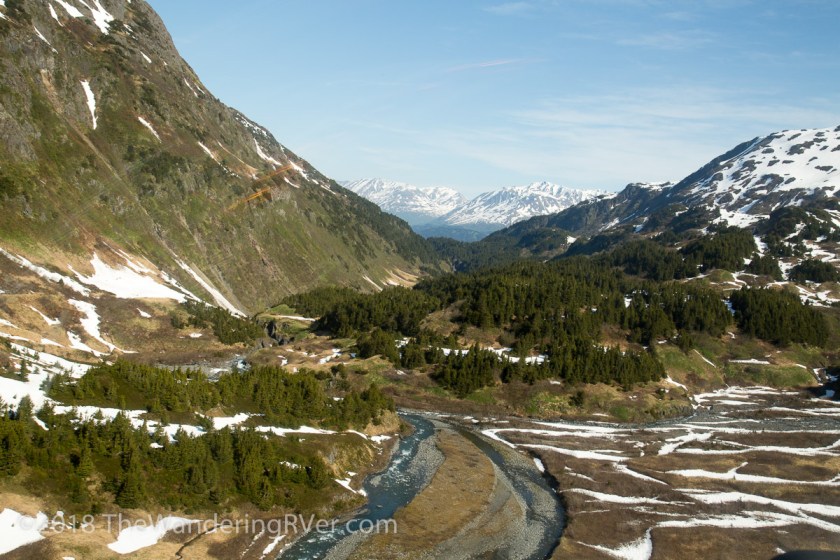
We knew our adventure was nearly over as we flew along the Resurrection River with its many creeks and streams…
It was an amazing adventure! Mike, in one word – AWESOME! The scenery so breathtaking, I’m still winded. If you’re ever in Seward, stop by Marathon Helicopter Tours and they will take you on an Alaska adventure you’ll never forget!
Have you ever been on a helicopter tour? Was your adventure as fun as ours? I’d love to hear about it!
The town of Seward is about 26 miles south of us and is the heart of Resurrection Bay. There are glacier cruises, fishing charters, kayak adventures – nearly anything you’d like to do on the water in Resurrection Bay is found in Seward. In late May, Steve and I went out With Kenai Fjords Tours hoping to see some wildlife and knowing we’d get to see several glaciers.
Our cruise left Seward at 10 am and I didn’t have great expectations about the weather. It was overcast, cold and windy.
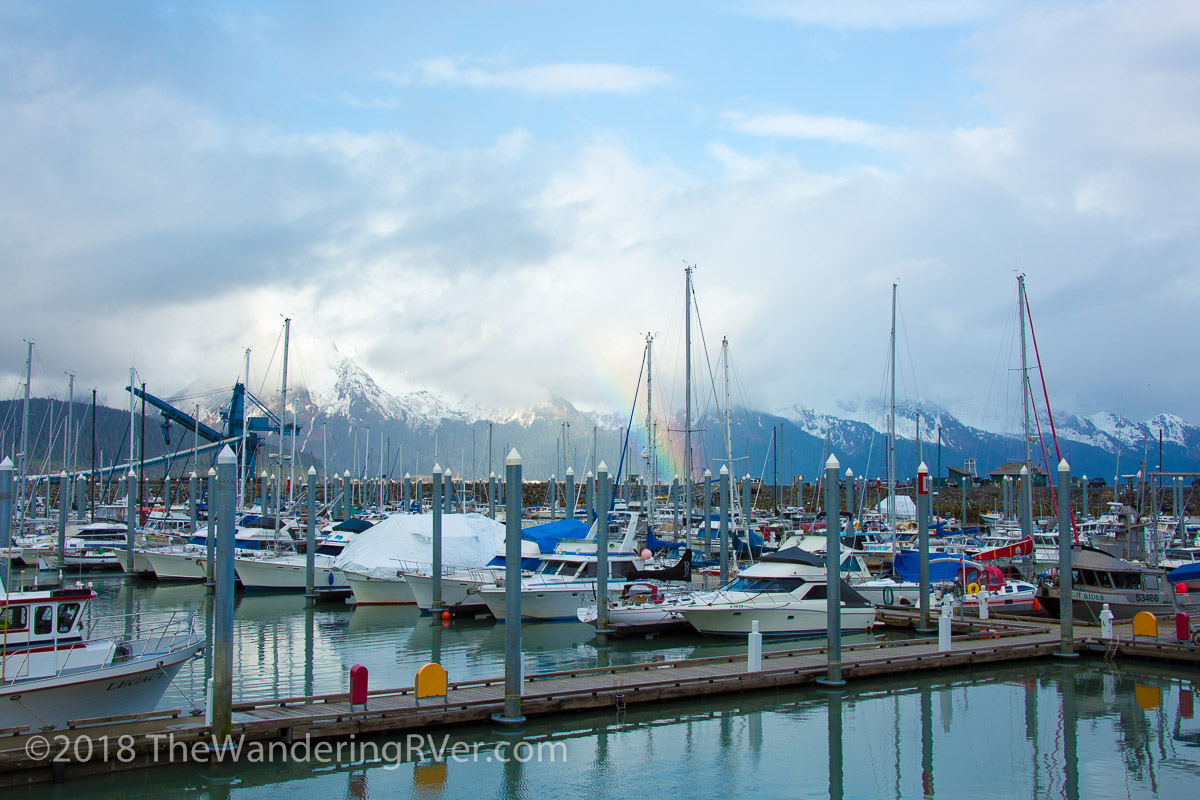
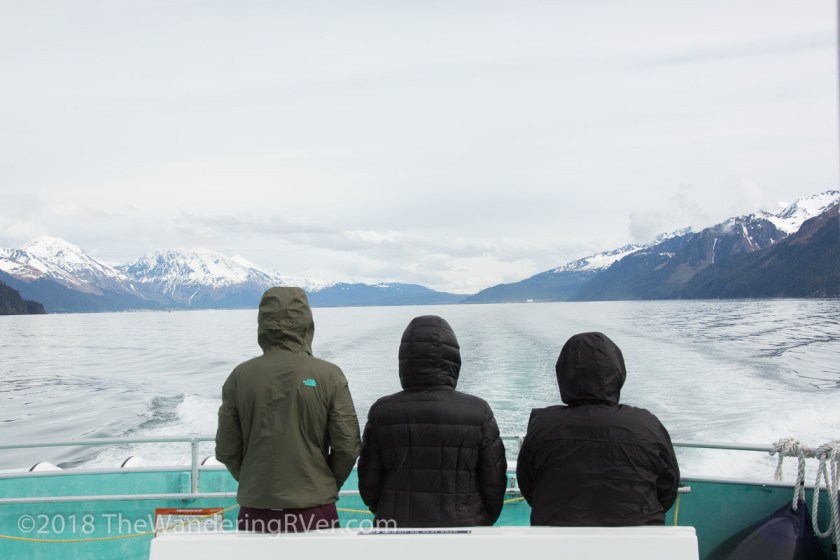
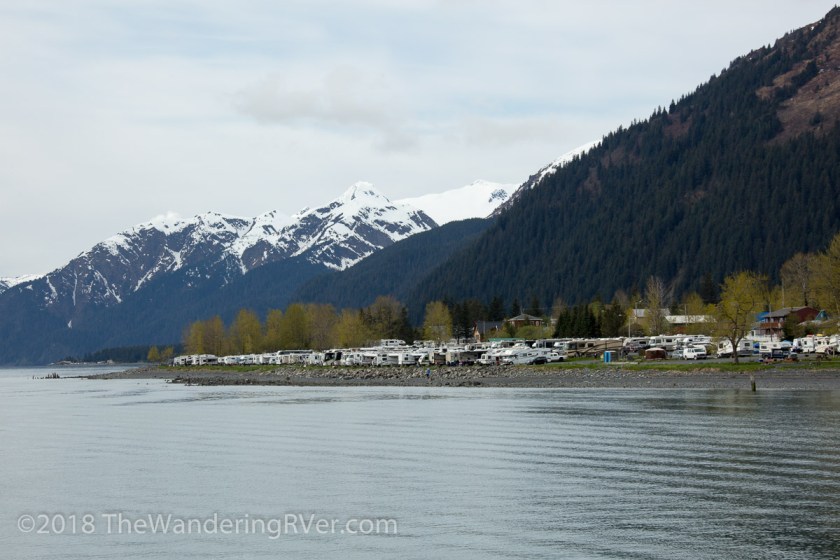
Everyone was bundled up! As we left the harbor, we had a great view of the town’s waterfront RV park (a place I’d love to spend some vaca time!)
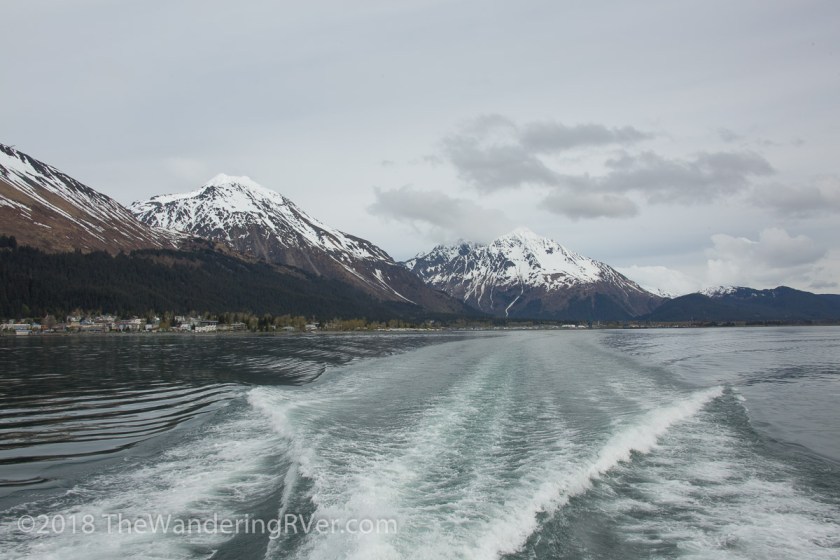
Looking back at the pictures I took, I was really disappointed. I don’t think any of them captured the beauty and excitedness we saw and felt.
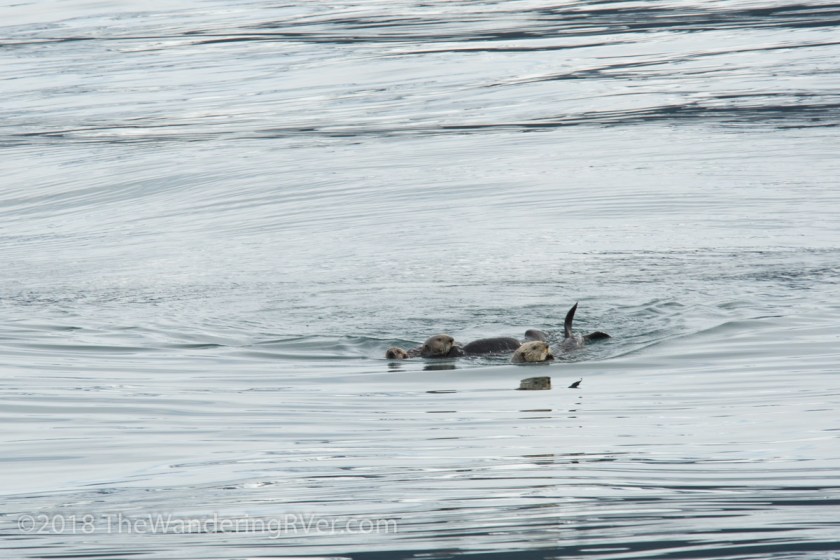
We hadn’t even gotten out of the harbor when we saw our first wildlife – sea otters…
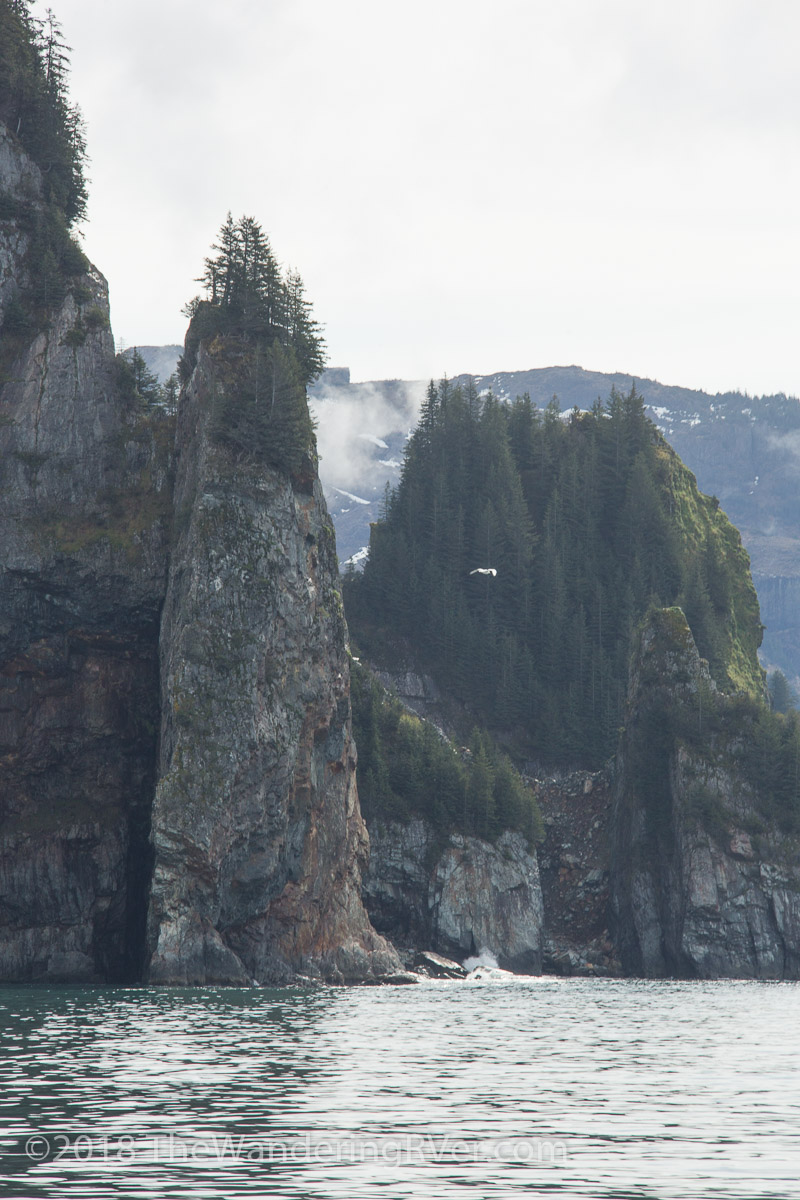
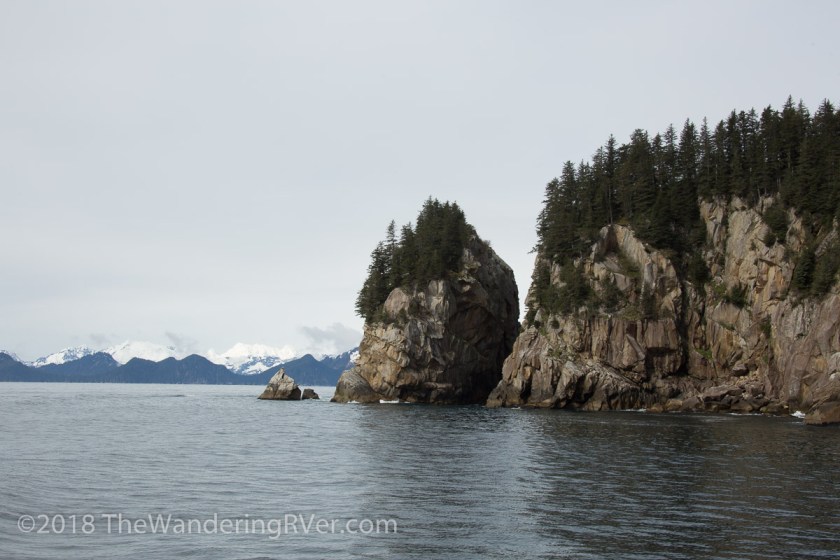
The captain and crew gave a first rate running commentary on everything we were seeing and made every attempt to get us as close to the wildlife as was possible without disturbing them. Despite the crappiness of the weather, there is no denying the beauty of the scenery…
Our next wildlife encounter was a group of Dall’s porpoises. They seemingly played in the boat’s wake, riding the waves and swimming along side of us, as if to race…
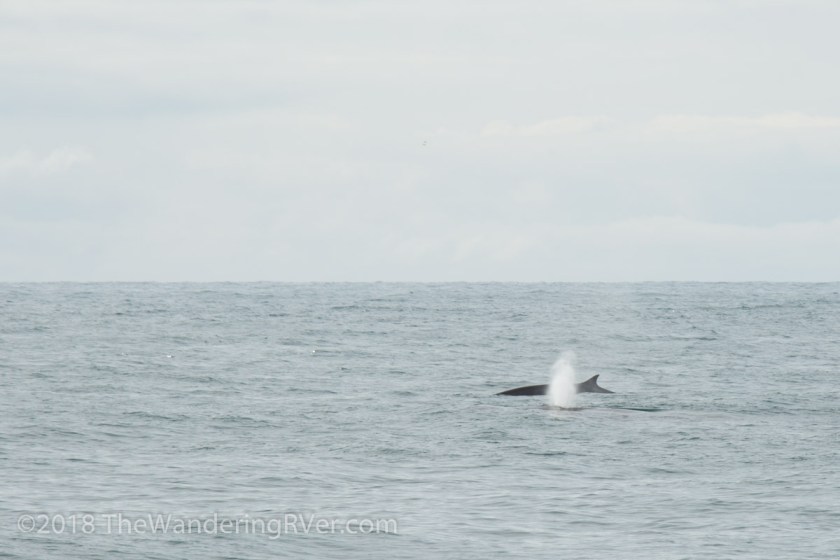
With their black and white bodies, if you look quick and don’t know the difference, you might think they were killer whales (orcas). The porpoises finally tired of playing with us and we moved on. Our next sighting was special because it isn’t often the endangered fin whales are this close to shore. Fin whales are the second largest creature to ever live on earth!
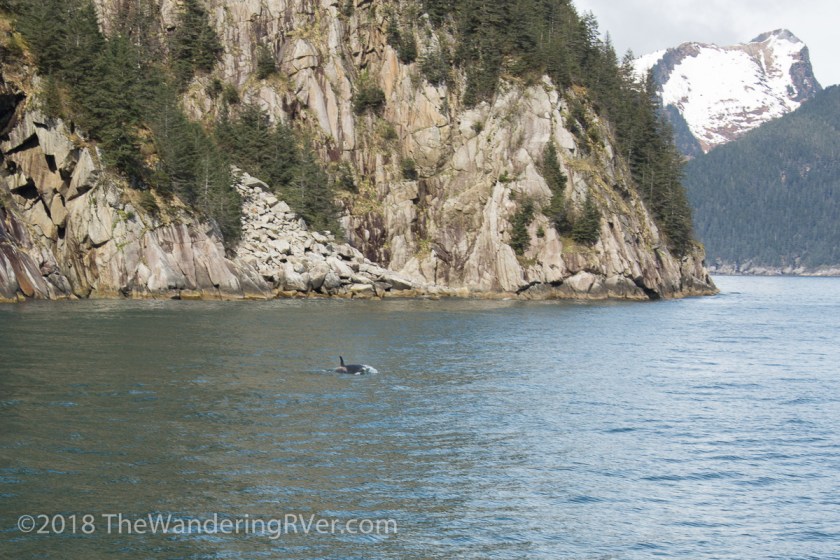
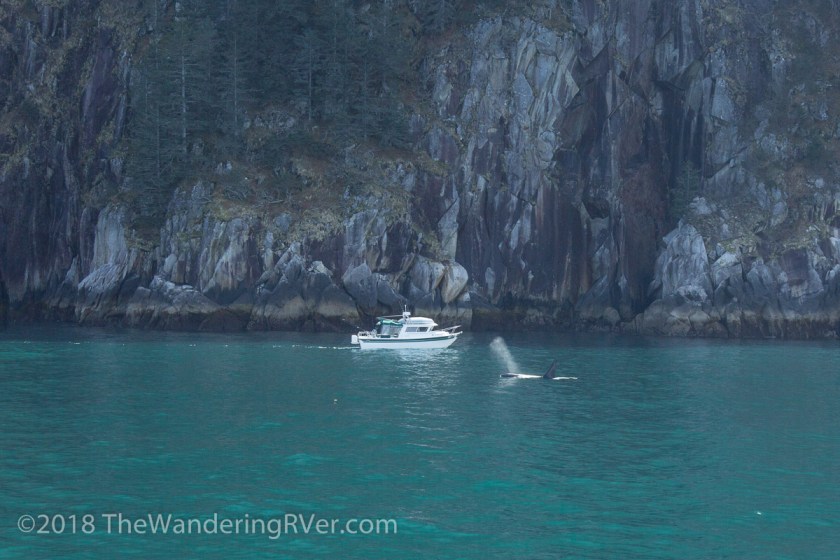
Leaving the fins behind, we came upon a pod of killer whales, aka orcas. Killer whales aren’t whales at all, they are members of the porpoise/dolphin family.
As we were watching, a smaller boat drifted in. They got a close up view…
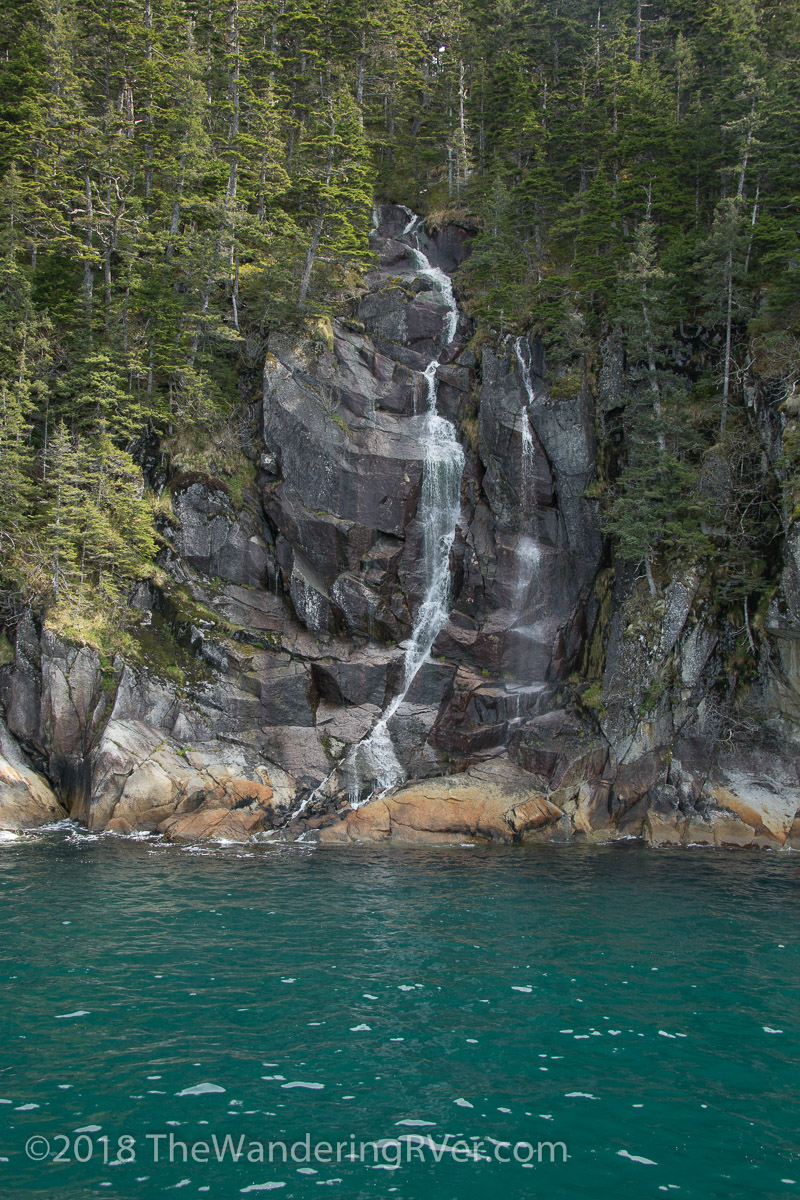
As if the dramatic cliffs and soaring, snow capped peaks weren’t enough scenery to make your jaw drop, the captain brought us into a cove with a glacier fed waterfall…
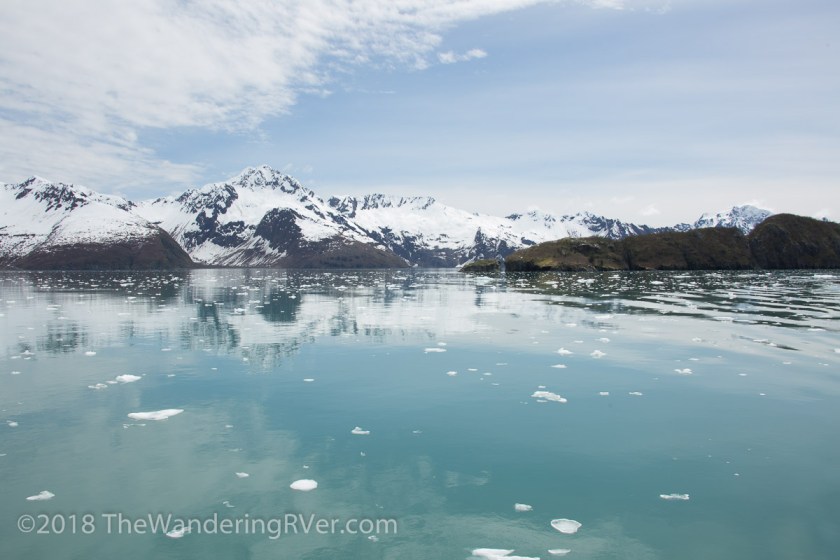
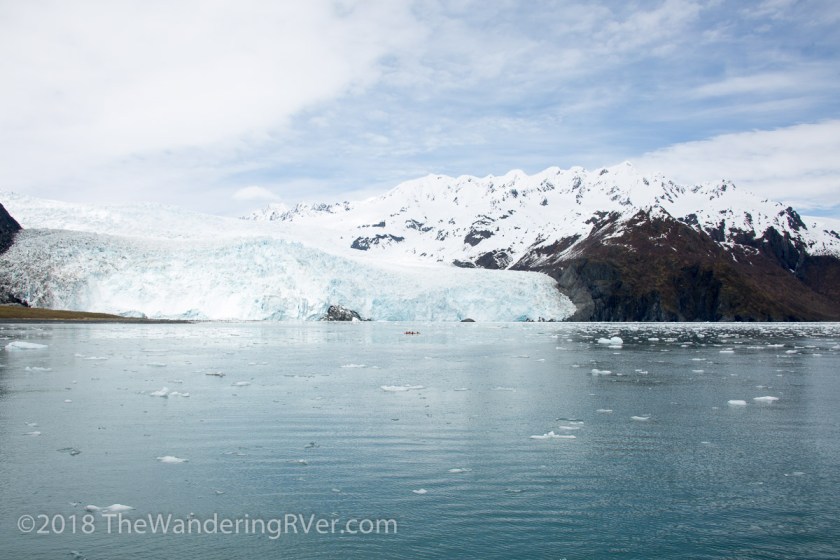
All this excitement and we hadn’t even gotten to the glacier yet. Our destination was Aialik Glacier, deep in Kenai Fjords National Park. The closer we got, the more ice we came across and, luckily, the bluer the skies became…
And then, there was Aialik Glacier…
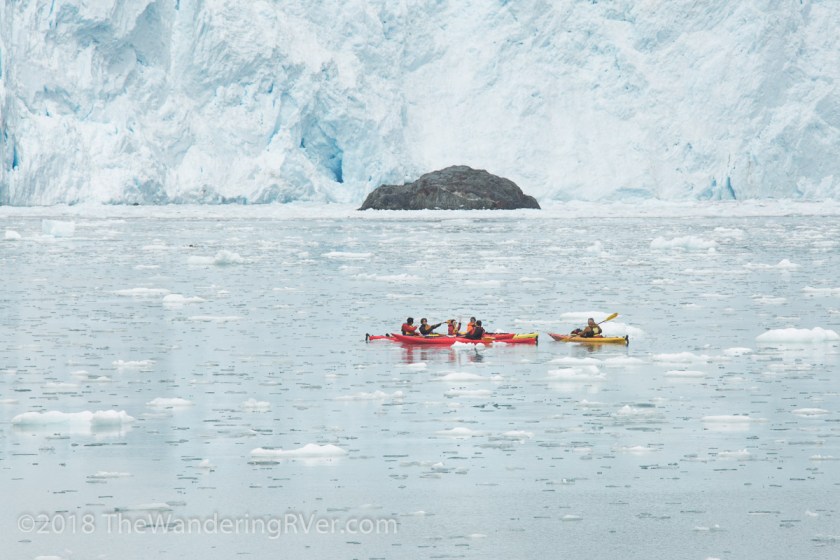
See the group of kayakers near the center of the picture? No thanks! As much as I enjoy kayaking, that wouldn’t be for me!
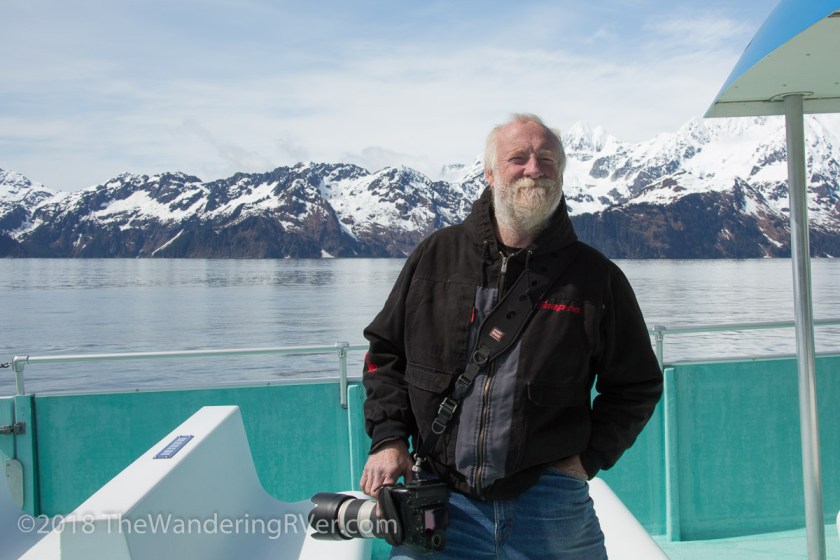
We didn’t get too witness any calving of the glacier, but the abundance of ice in the water suggested it had been active recently.I’m pretty sure Steve was enjoying himself, what do you think?
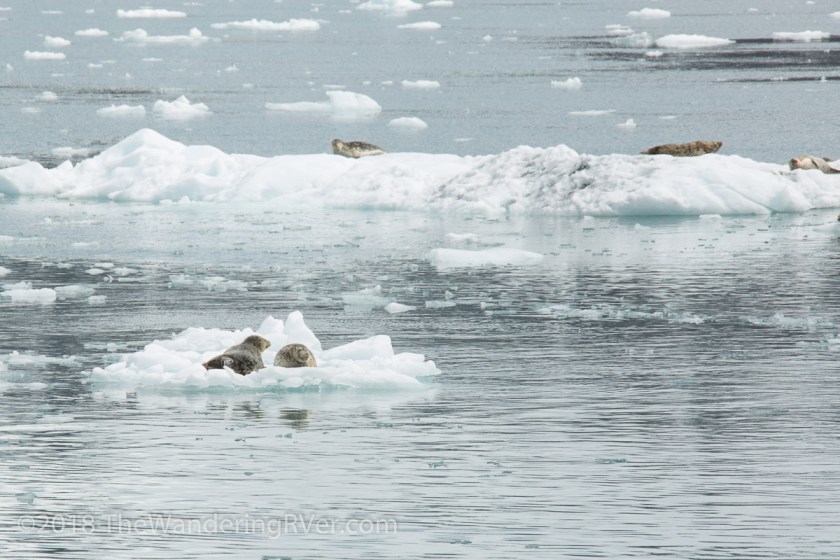
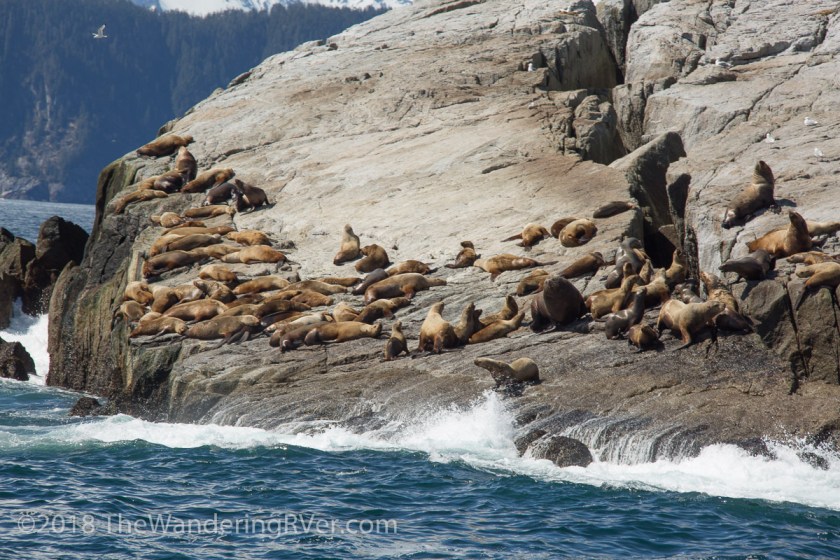
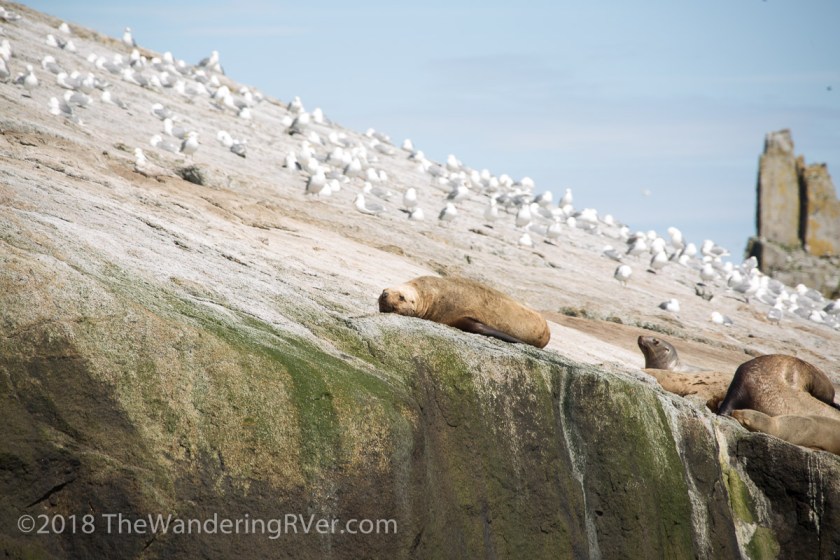
We were about half way through our cruise, but there were plenty of things yet to see. On our way back towards Seward, we motored around several of the islands. My favorite was the one with all the steller sea lions on it…
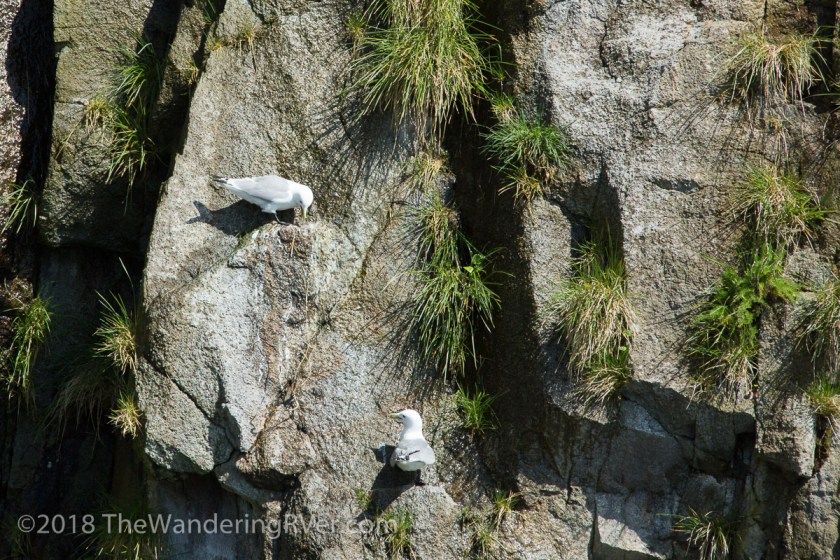
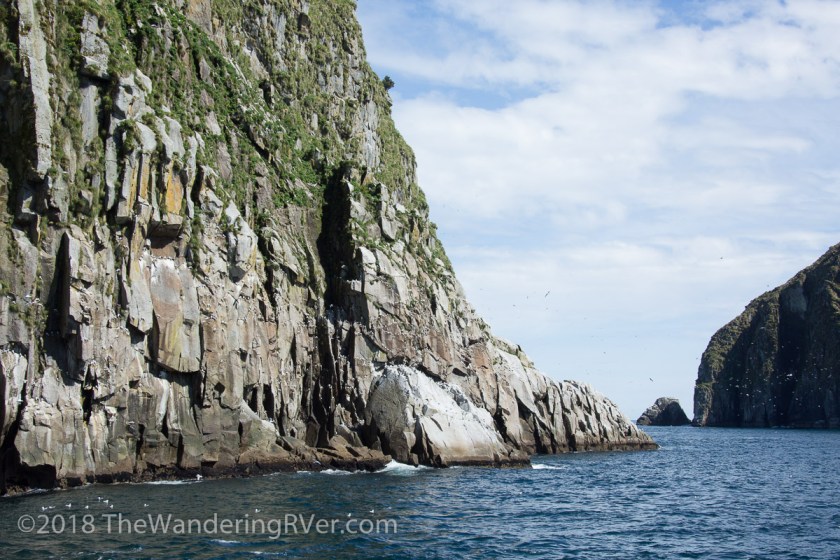
And the colony of kittiwakes nesting on the face of the cliffs…
But, our luck hadn’t run out yet, we came across a humpback whale…
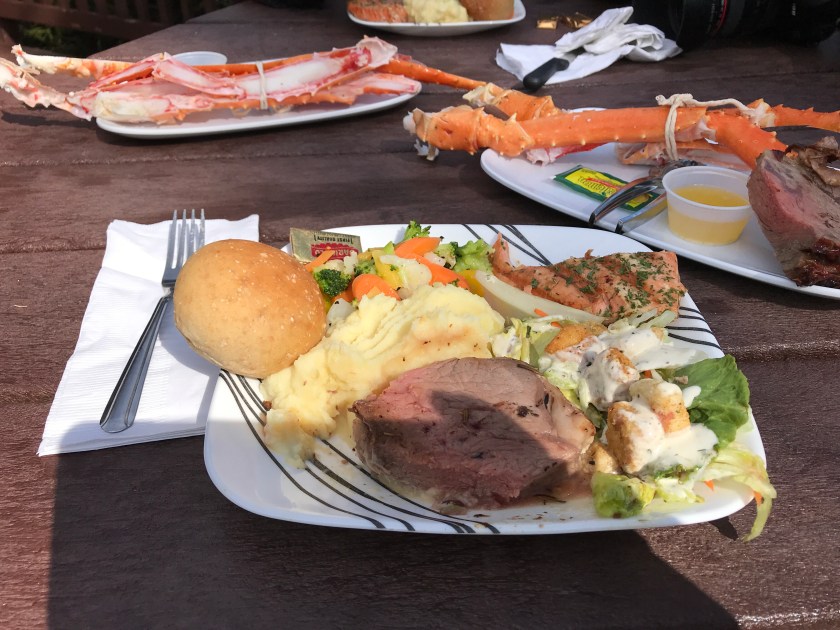
One of the reasons we chose this tour over some of the others, was this tour stopped at Fox Island for an all you can eat prime rib and salmon buffet. I would have taken more pictures of Fox Island, but I was too busy stuffing my face! Steve and I both opted to add the king crab legs (at $15 a person, how could we not!)
We were almost back to Seward when we got our final wildlife encounter. There were mountain gloats high above us on the rocky outcropping…
All in all, even if I think the pictures don’t do it any sort of justice, it was an amazing cruise with stunning scenery and more wildlife than I ever expected.
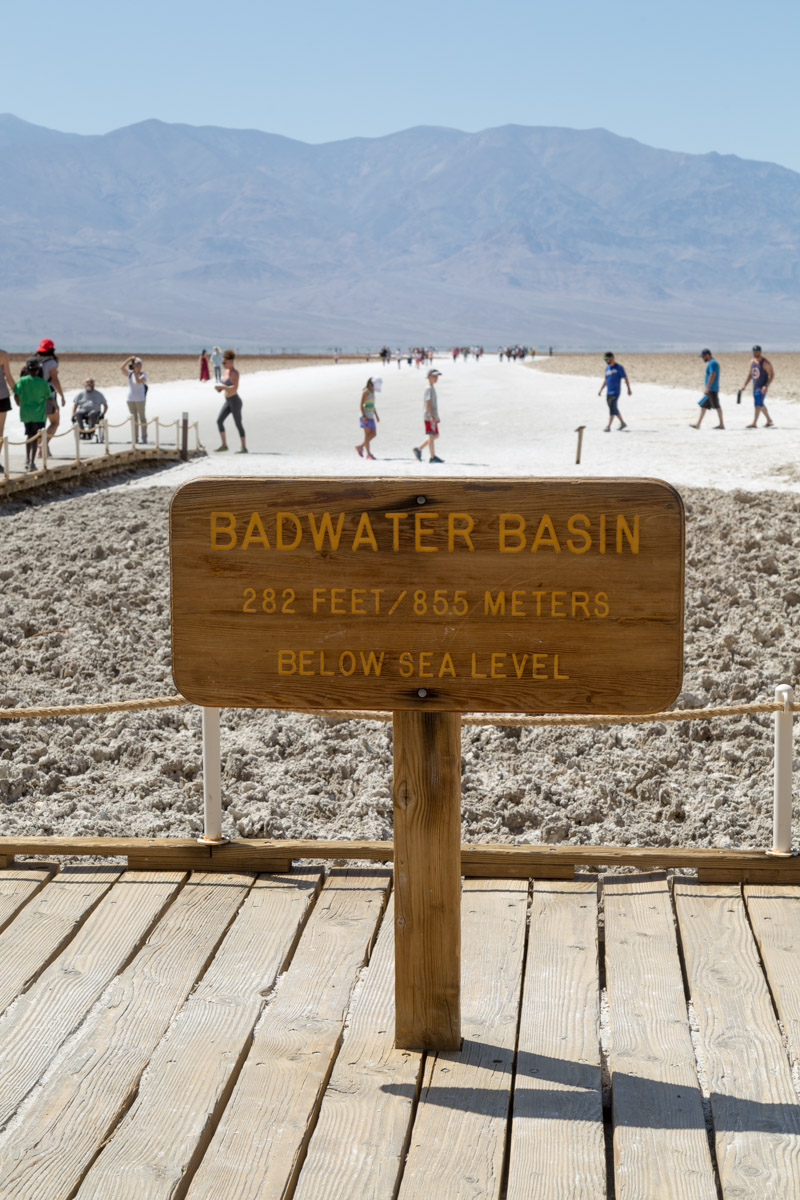
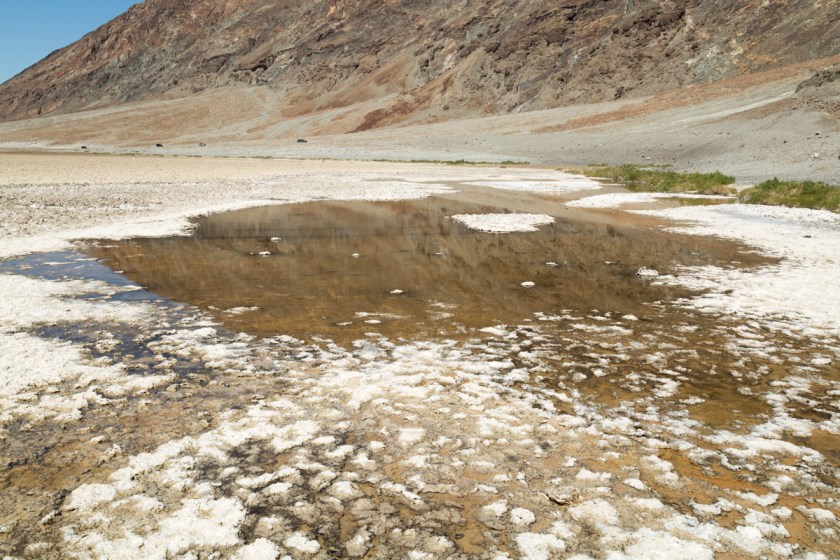
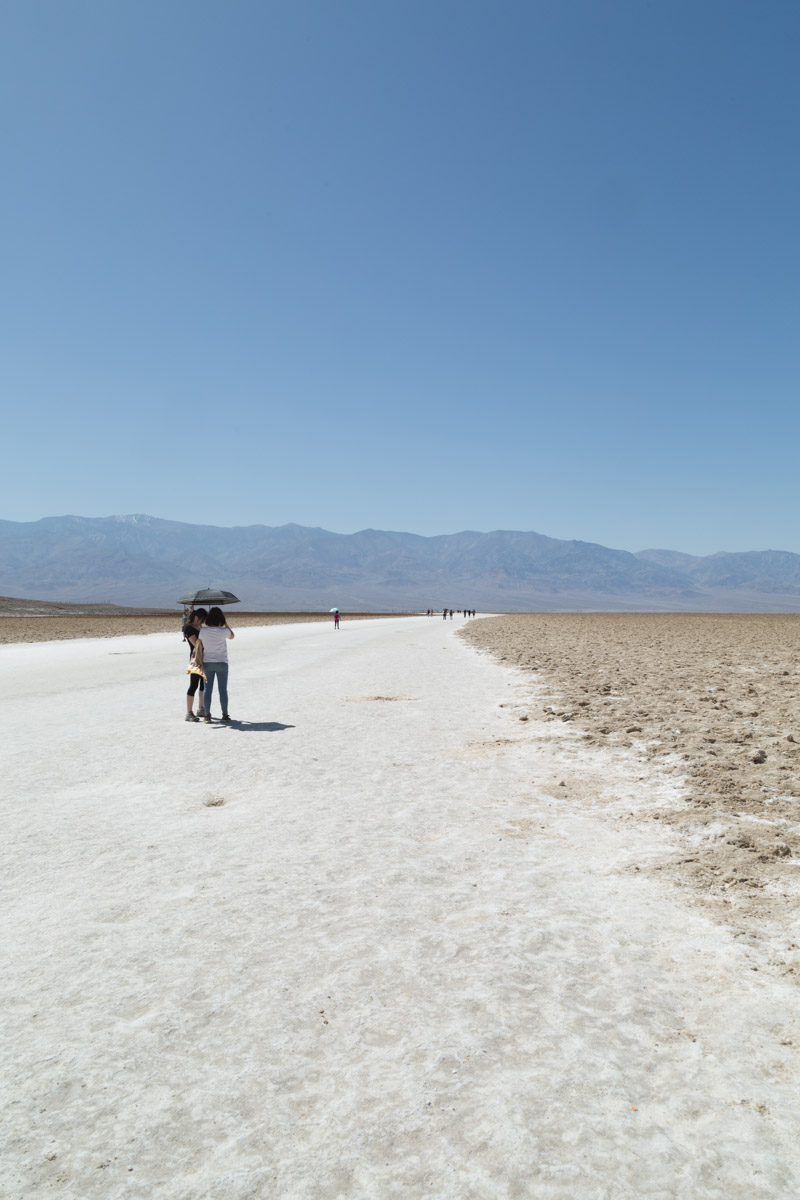
If you missed part 1 , you can catch up here. Badwater Basin is the lowest point in the United States, at 282 feet below sea level. The walk to the actual spot (about 1 1/2 miles from the marker sign) is along a salt packed trail. The shallow pools of water will evaporate over the summer leaving crusty salt mounds as far as you can see…
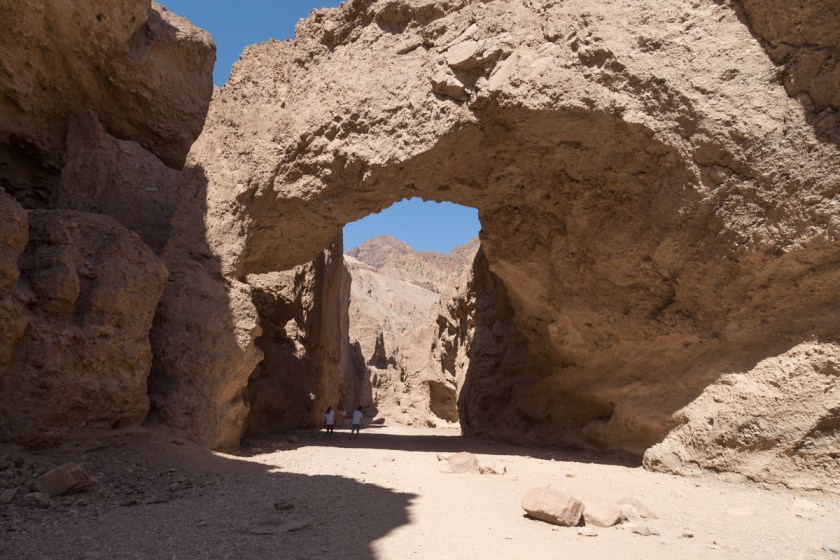
Since there was still so much we wanted to see, we didn’t walk all the way to the actual spot. We still had a couple hikes we wanted to do and with the temps pushing 90 degrees at 10 am we decided to move on. Our next stop was the natural bridge. It’s a fairly easy walk, despite being uphill. I can’t imagine the force of the water needed to carve such a bridge…
See the 2 hikers in the shadow of the bridge?
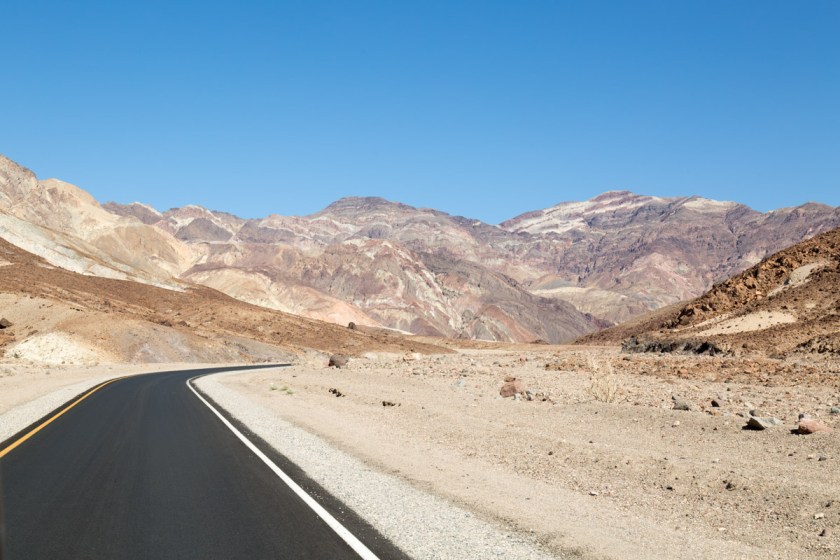
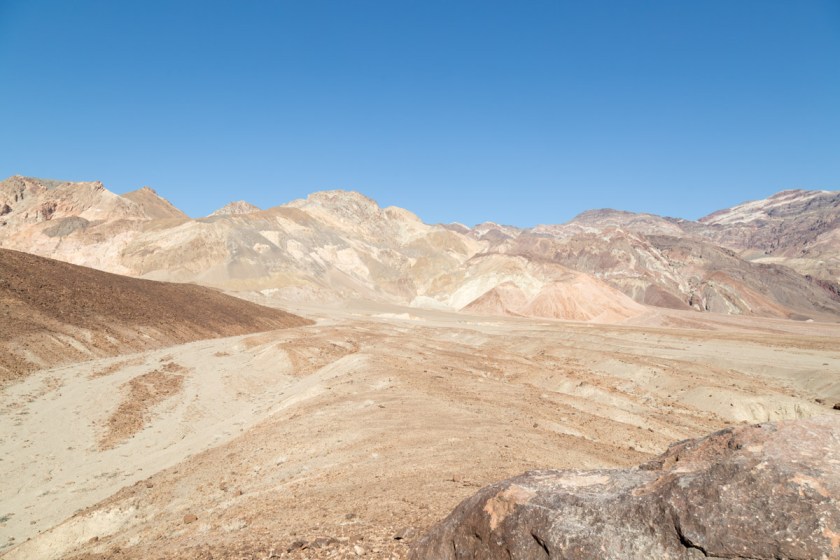
The National Park system did a great job of designing the scenic drives through the park. Most of them are one way and loop back to the main road. One such route is called Artists Drive. It is a 9 mile loop through some of the most colorful formations in the park. The narrow road winds through multi-hued volcanic and sedimentary hills…
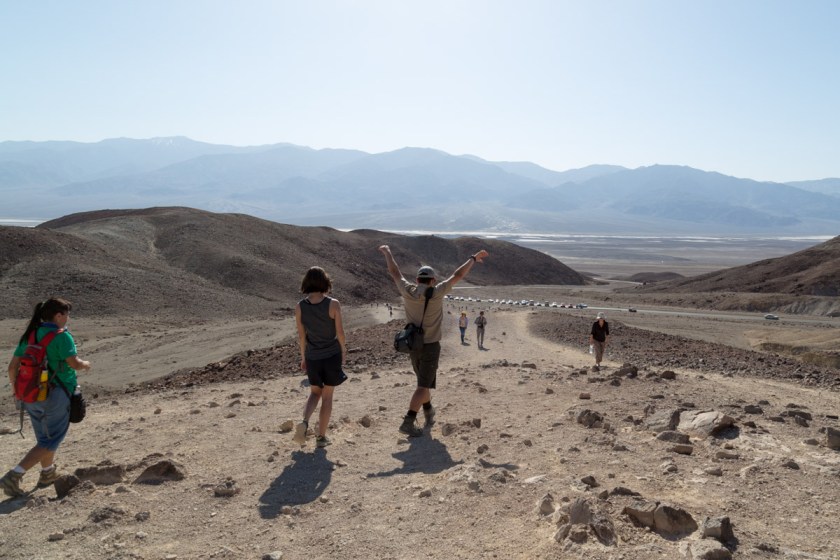
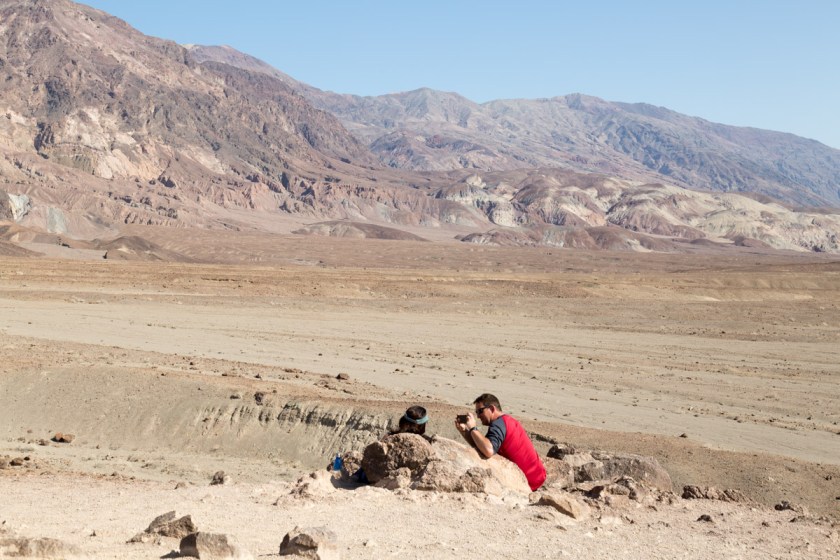
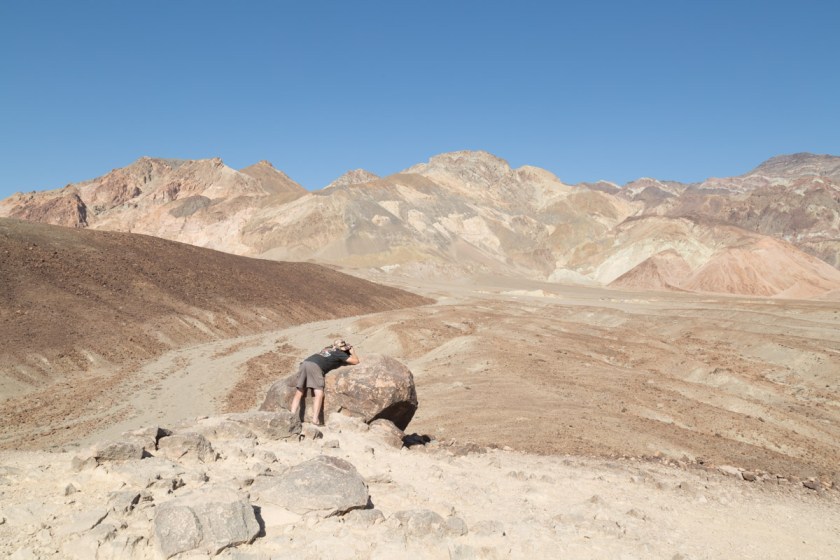
At the first pullout, we walked to the top of a fairly steep hill to get a better view of the landscape…
A great location to snap some memoriesSteve – finding his focus
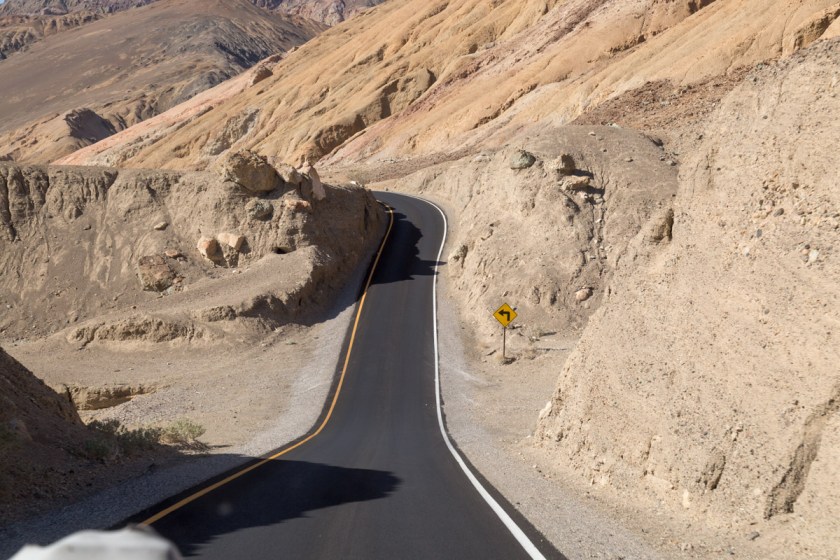
Back on the road, I looked over and Steve was grinning, ear to ear. The twisting road had him itching to test the laws of gravity…
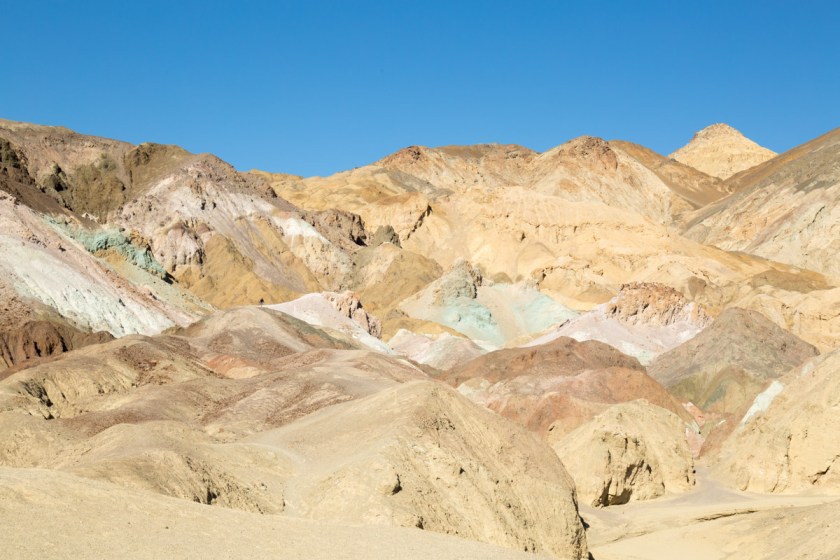
The next pullout is at a spot appropriately named Artist’s Palette. The colors were amazing. It’s like Mother Nature filled her paint brush with reds, browns, tans and greens, then spattered the colors much like a child fingerpaints…
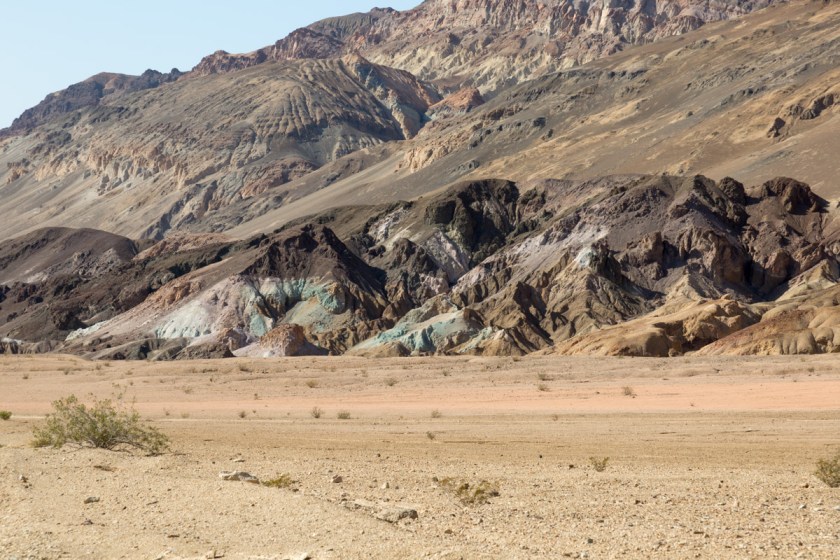
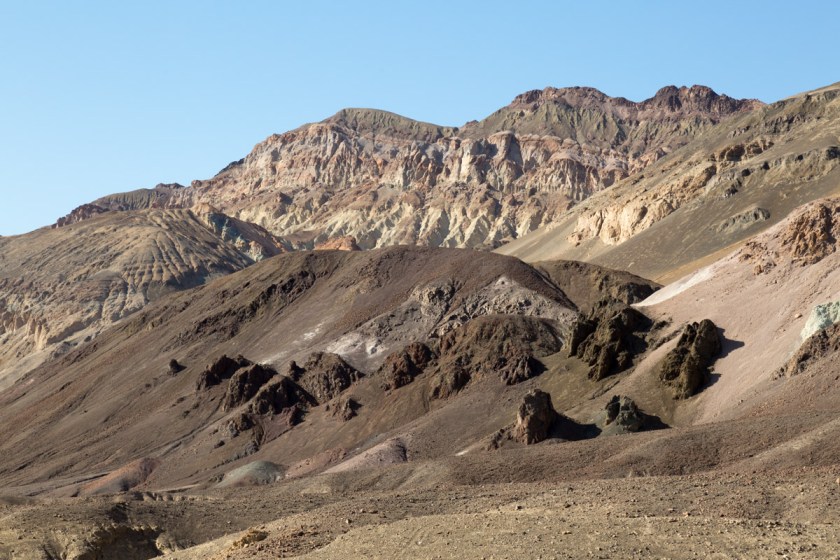
As we were exiting the drive, the scenery changed yet again…
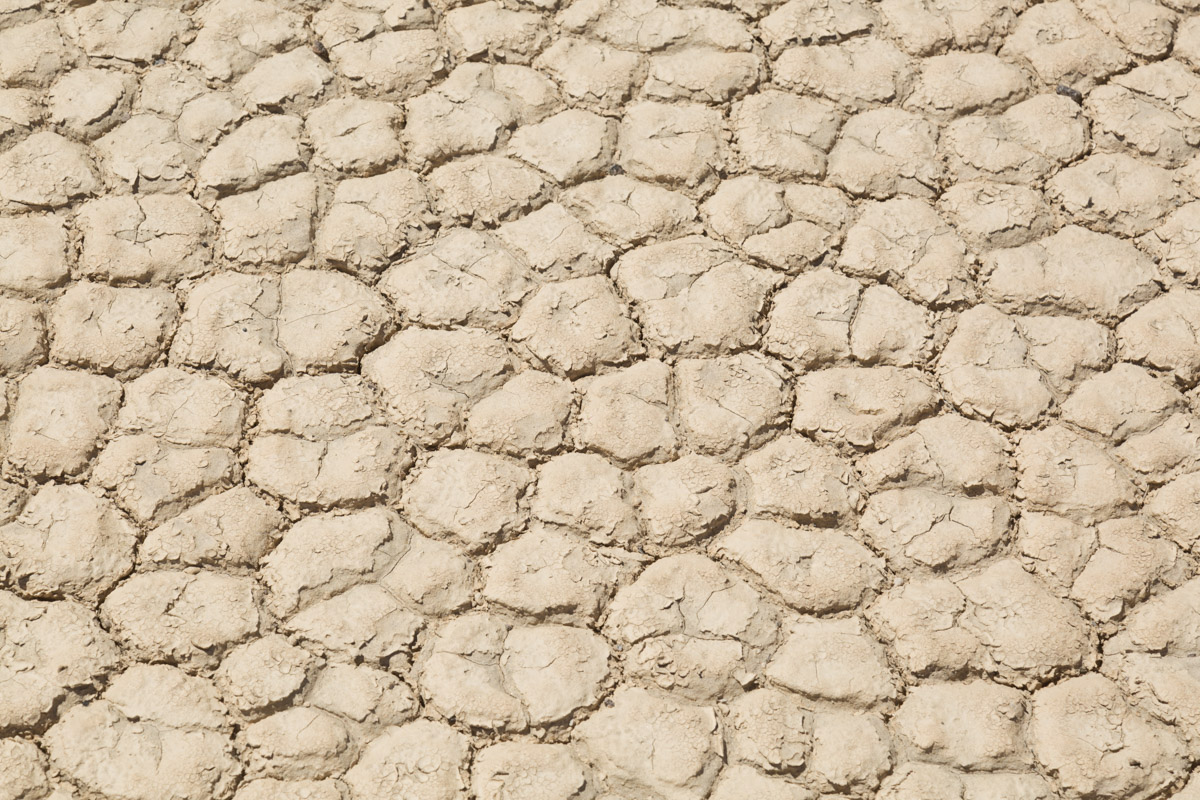
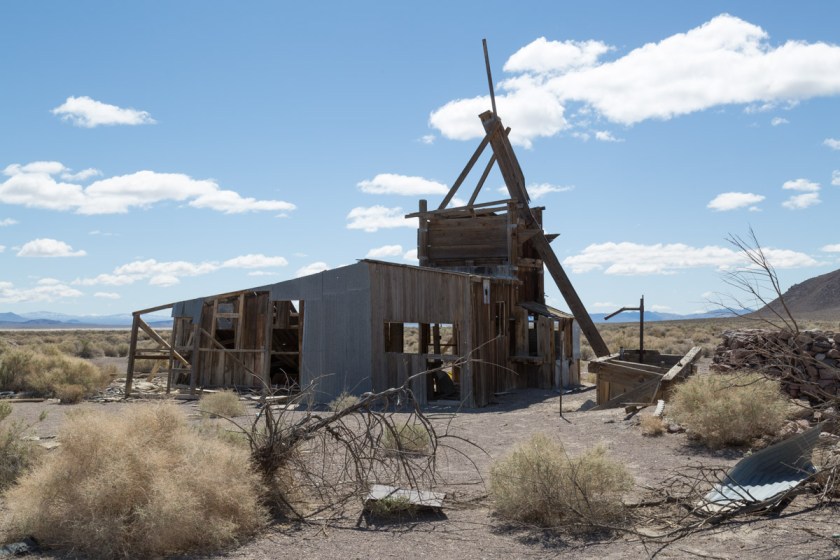
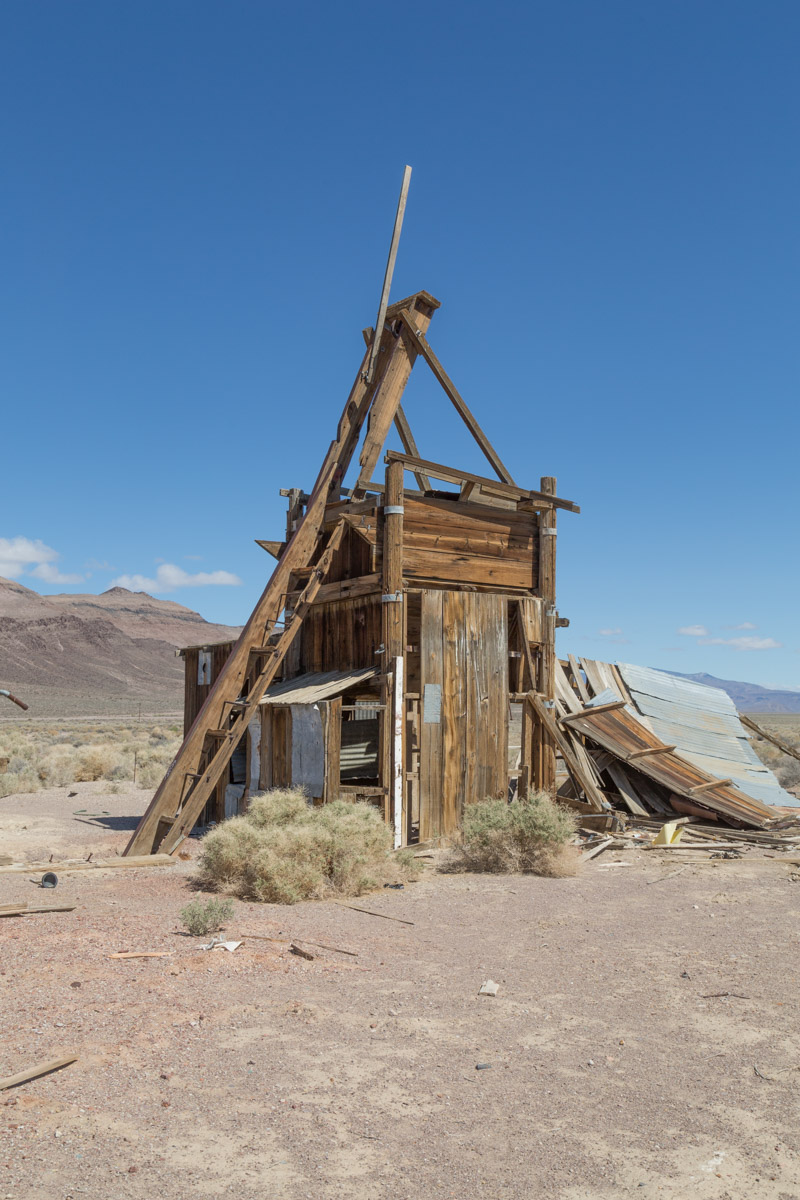
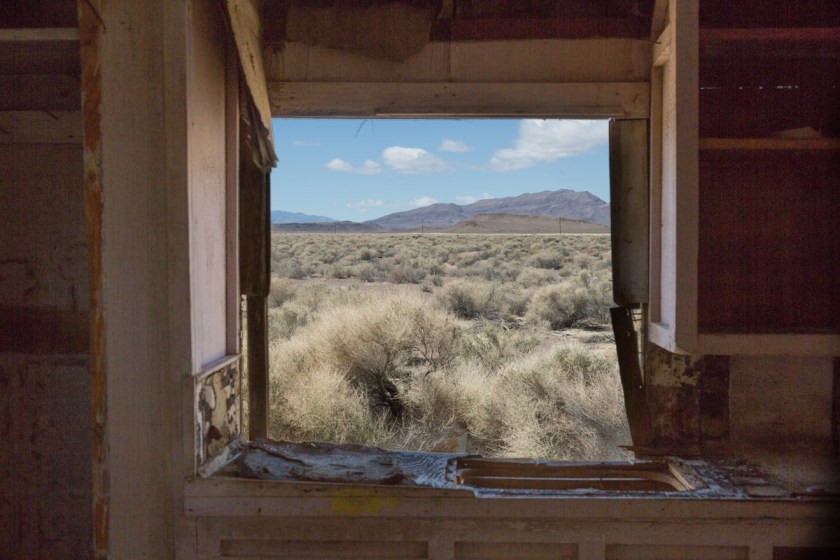
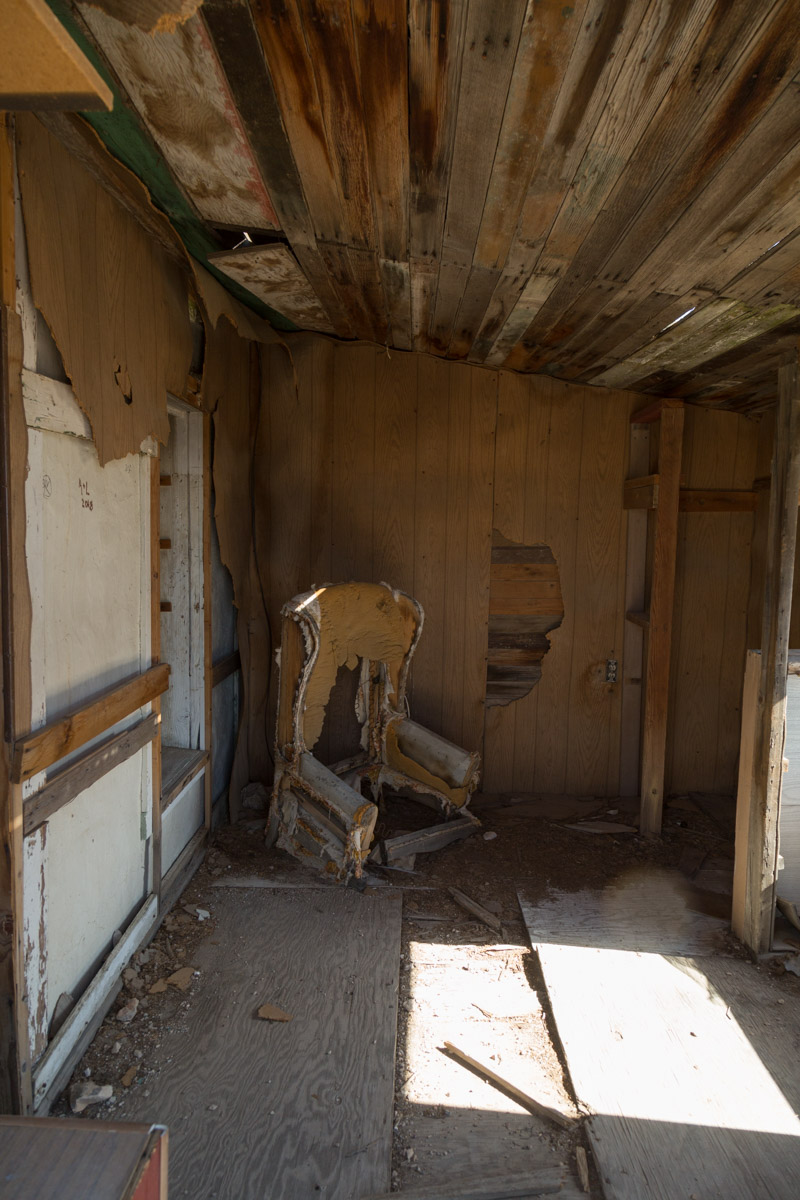
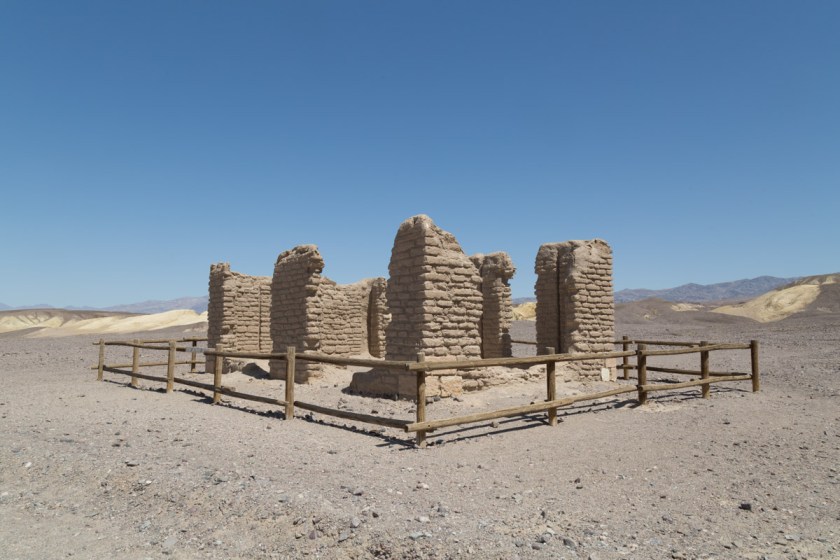
We were running out of time at Death Valley, but there was on more place I HAD to see – Racetrack Playa! (Read more about the interesting history and geology here) A playa is a dried lake bed and the Racetrack is nearly 3 miles long and 2 miles wide. Scientists estimate the dried beige mud is at least 1000 feet thick. The surface is so flat, it only varies 1 1/2 inches from end to end. We first attempted to reach the Racetrack via Scotty’s Castle Road. We were hoping the road closure signs meant the road was closed somewhere beyond the turn off to the Racetrack. A freak flood event happened in 2015 and destroyed the road and caused severe damage to Scotty’s Castle. (See pictures here). Of course, the road was closed prior to the turn off, so we had to settle on seeing more abandon buildings (I know, poor us, huh?)
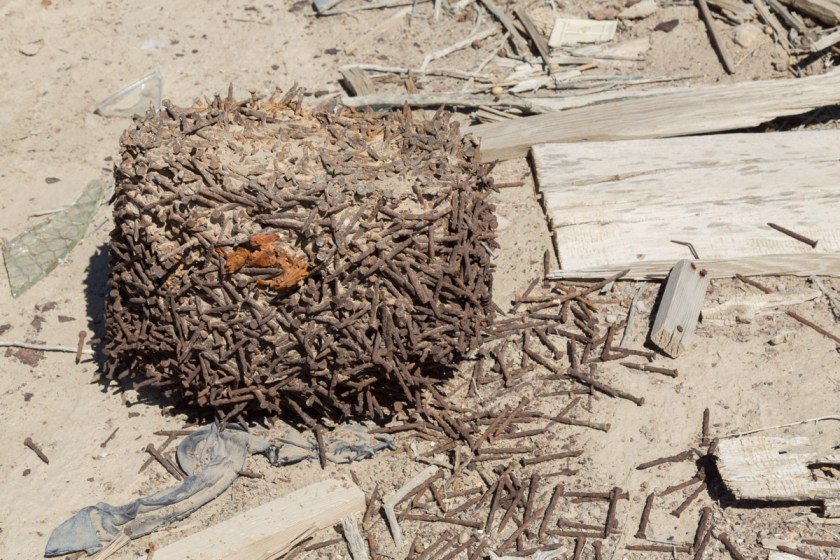
You know I had to go inside and look aroundHow long do you think these nails took to fuse together like this?
We had one more day and I was determined to get to the Racetrack. We checked the map and found an alternate route. One that comes with a warning…
“Caution: Rough and Remote Road
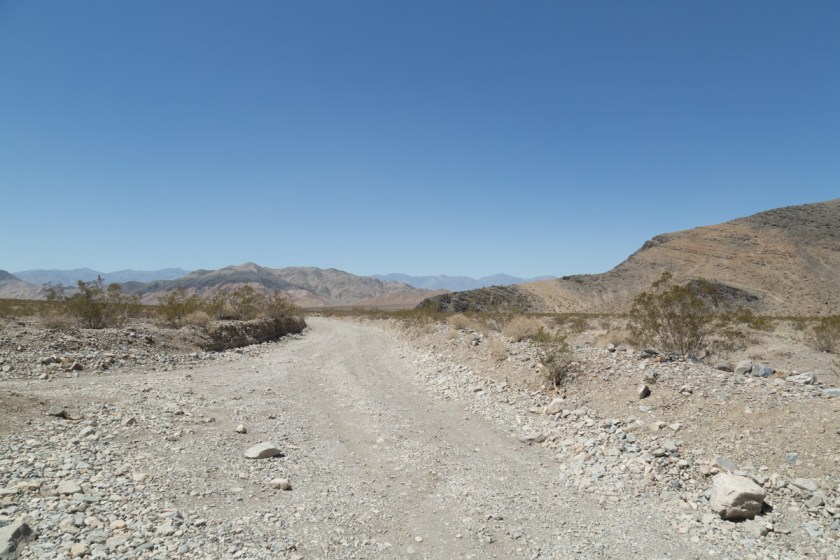
The road to the Racetrack is rough, and good tires, 4×4 and high clearance are usually required. Standard rental vehicles are not recommended, and often get flat tires. Use extreme caution on this road in the summer heat. There is no cell phone coverage in the area. Drive time from Furnace Creek is at least 3.5 hours each way. Other access roads make for even longer and more remote adventures. Driving offroad is strictly prohibited.”
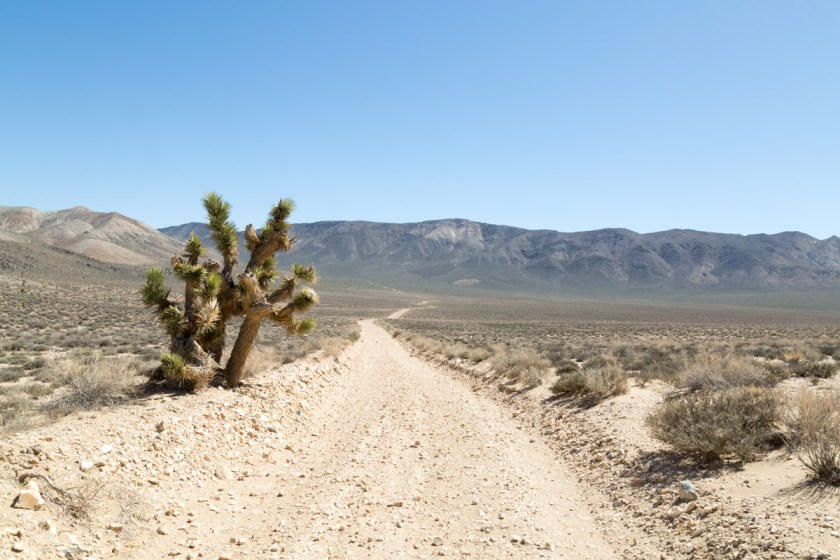
OK…let’s go! When we left the pavement, the adventure began. I was finding it incredibly difficult to make any time. I kept having Steve stop the Jeep so I could take pictures…
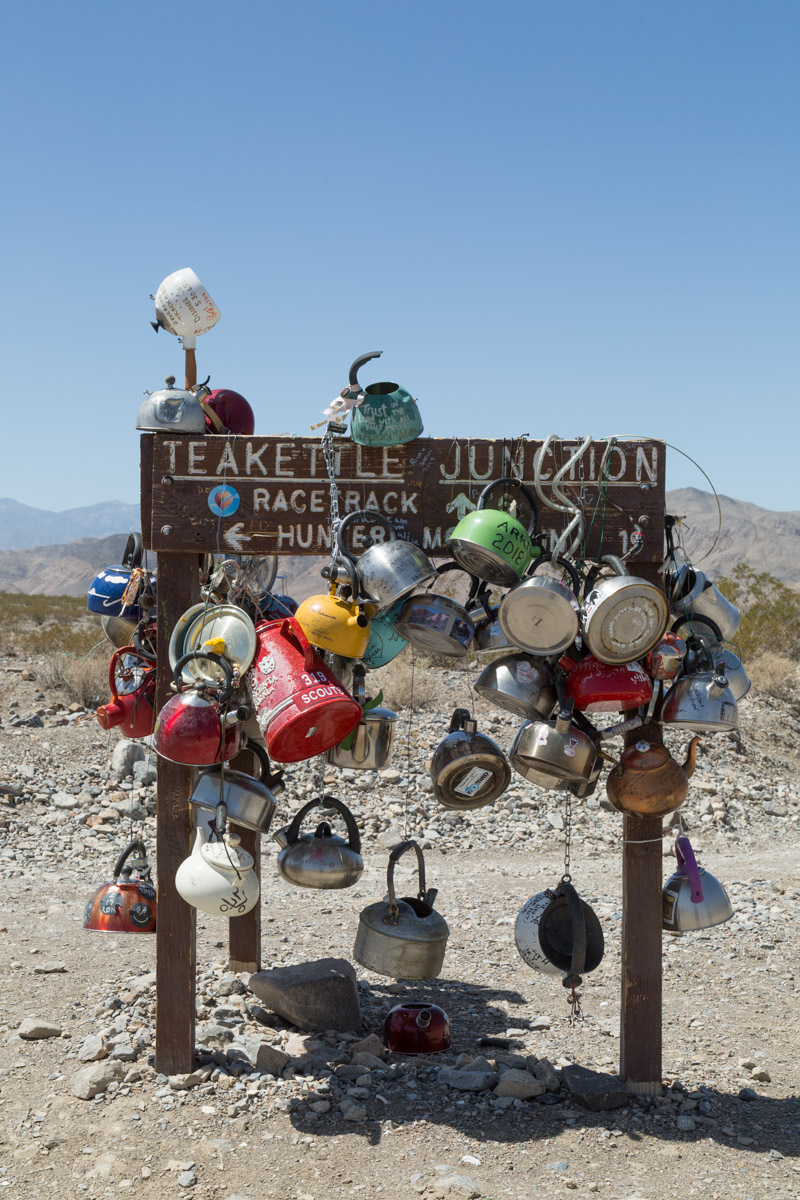
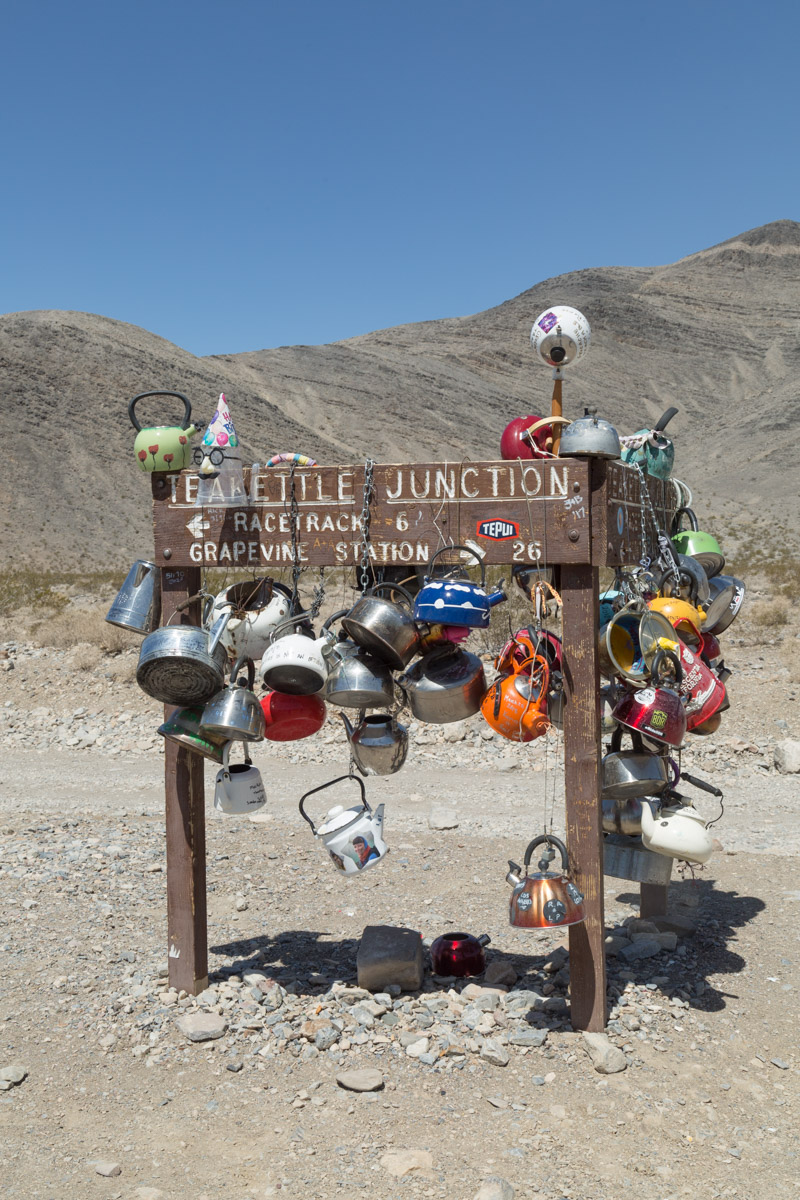
There is only one sign along the 26 mile route and I found it rather bizzare…
Legend says early travelers to the area put the first teakettles there to let others know there was water nearby. I don’t know if it is true or not, I never saw any water.
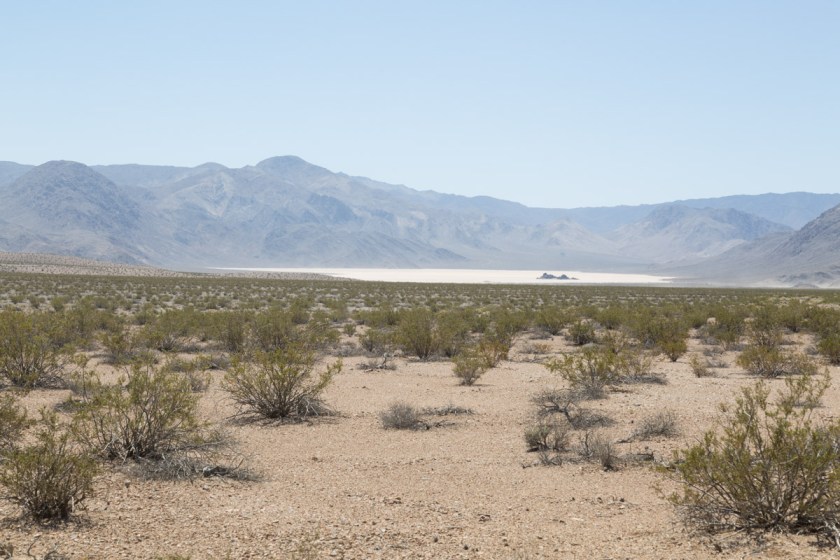
We were still 6 miles from the Racetrack, so off we went. As we rounded one curve in the road, we got our first view of Racetrack…
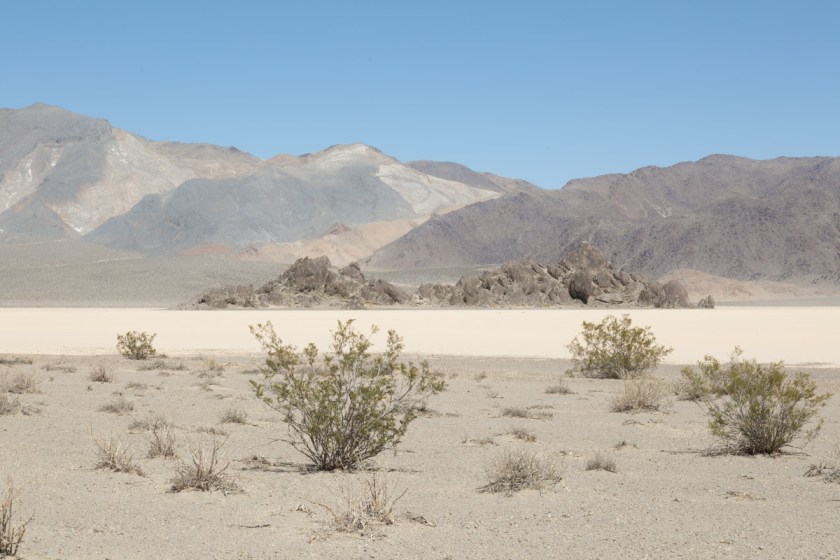
The outcropping of rocks in the middle is called the Grandstand…
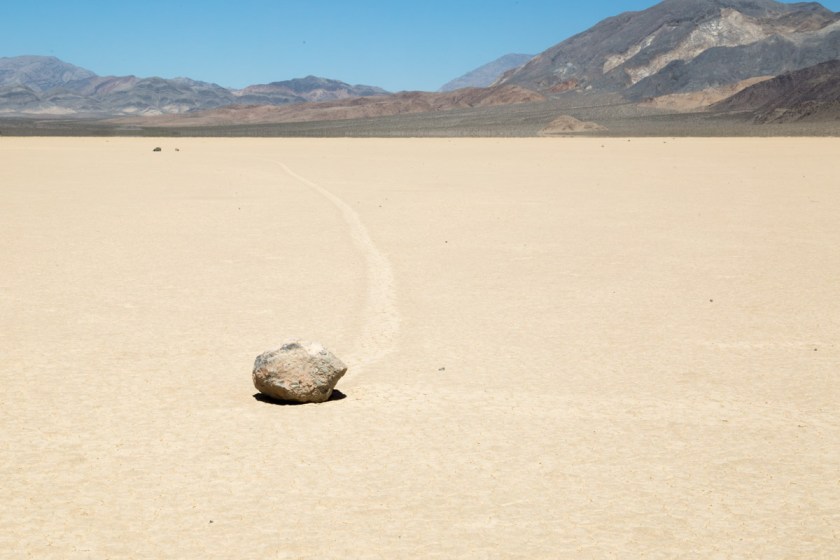
What is so fascinating about Racetrack is the mysterious moving rocks. Although the mystery of how/why the rocks move was solved in 2014 (Read about it here), it still boggles my mind…
See the tracks left by the moving rocks?
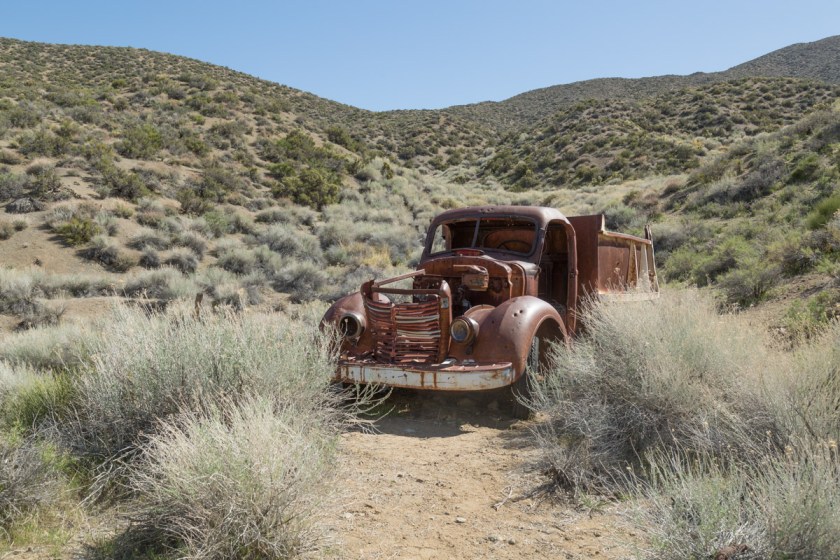
Two NPS Rangers were at Racetrack replacing a sign and we talked to them for quite a while. One of them said they have seen the playa completely under water and a day later, not a sign of water could be seen. He also said if people walk on it when it is wet, the footprints can stay there for years. The Jeep was just over half a tank of gas and we wondered if going back the same way we came was the best route. The ranger told us Hunter Mountain Pass was a drive we shouldn’t miss and we wouldn’t have a problem with 1/2 a tank of fuel. OK – Hunter Mountain it is! We drove back to Teakettle Junction and headed into the wild. As I mentioned before, there aren’t any road signs in the back country. Our GPS said we were on Hunter Mountain Road and I figured as long as it said that, we would be fine. Hmmm. When we came to the first split in the road, we went the werong way. That was ok, because it quickly dead ended at an abandon mine…
End of the line
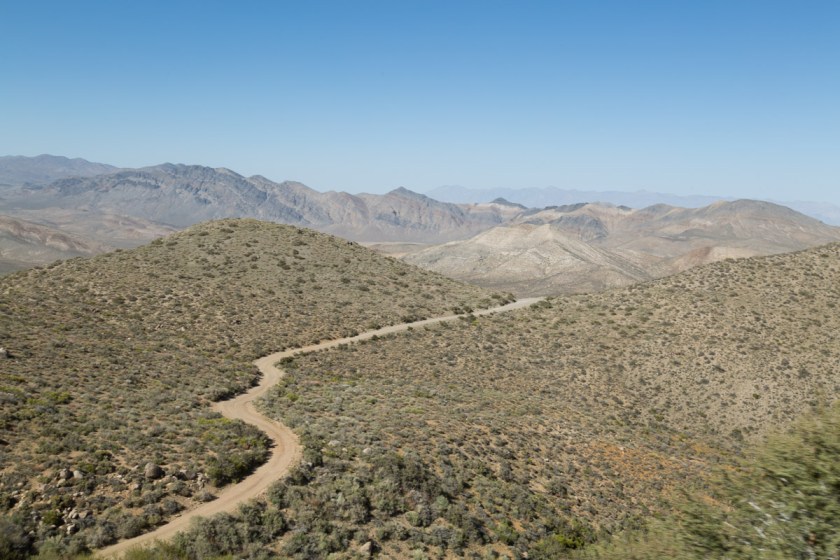
We got back on what we hoped was the right road and continued on. I could see the road off in the distance as it began to climb Hunter Mountain…
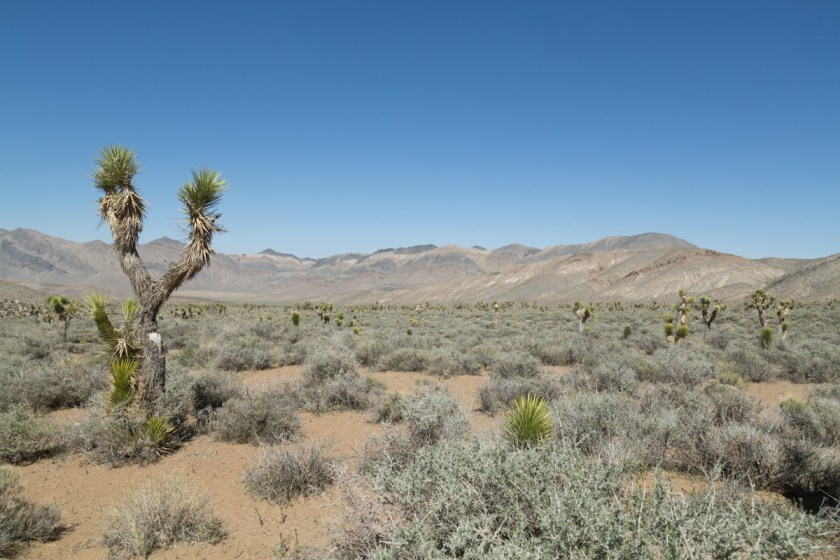
We passed a large area full of Joshua Trees…
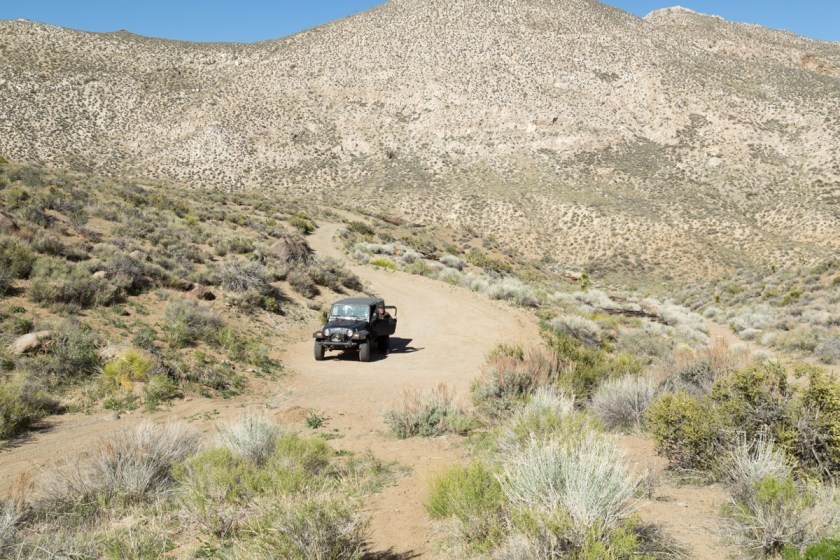
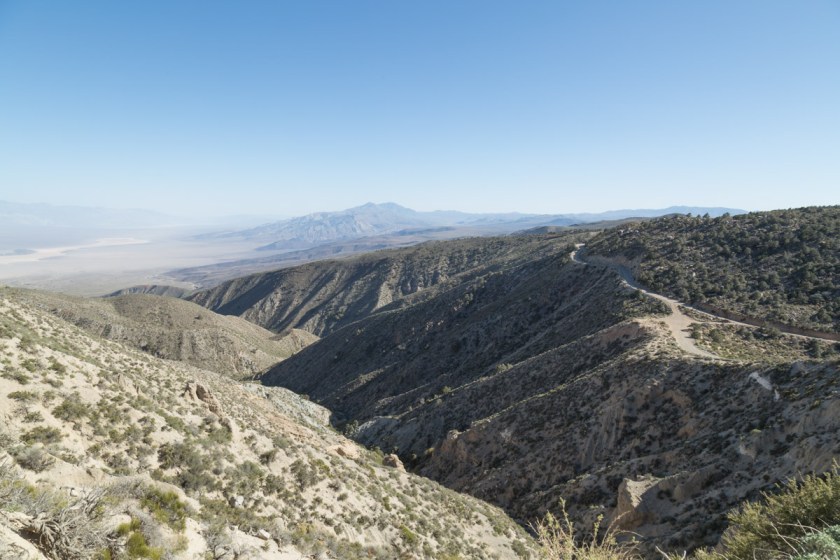
And began the climb. The road was barely wide enough for the Jeep and was a continuous set of switchbacks. The summit of Hunter Mountain is 7168 feet and the view is stunning…
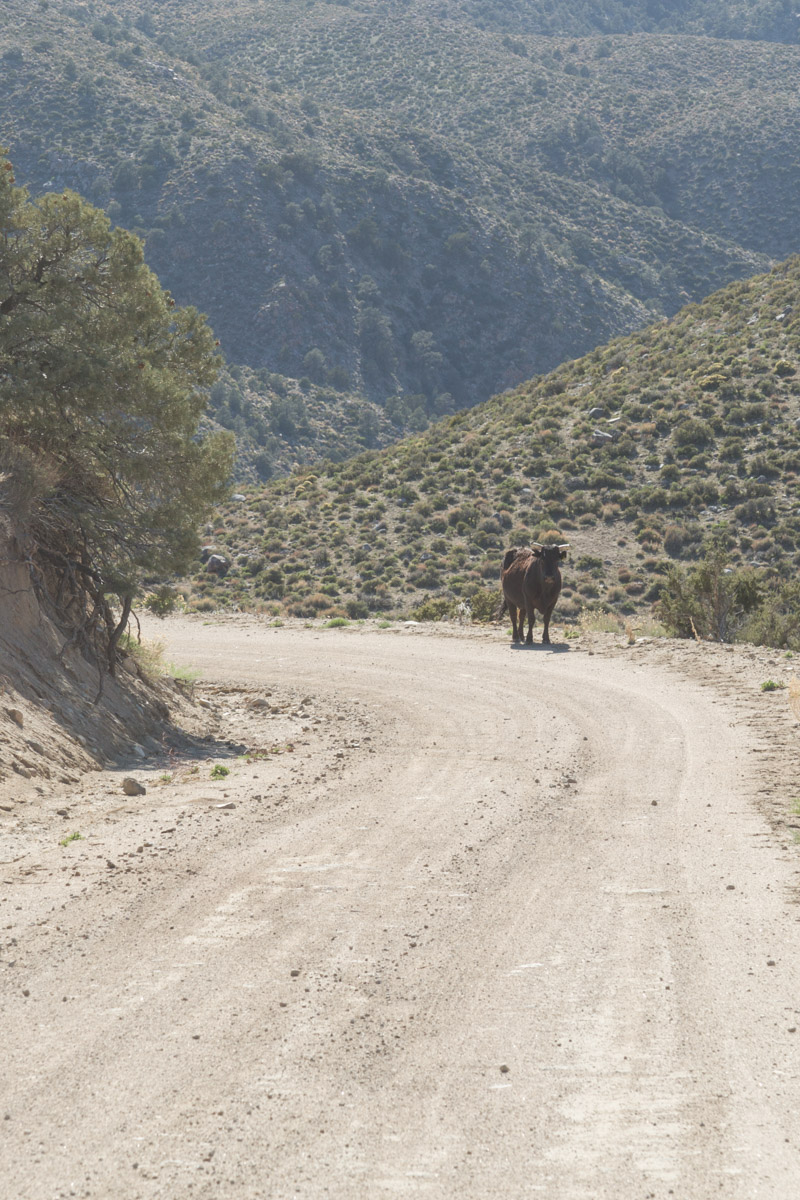
I was beginning to worry we were on the wrong road and were bound to run out of gas. I had no interest in being stranded, with no cell service, miles from anywhere! Finally, we passed another vehicle. The folks assured us we were on the right road, but it was still 30 miles to Panamint Springs. We got a bit of a surprise as we rounded a corner – free range cattle in the middle of the road…
When we made it back to the pavement, we made a beeline for Panamint Springs and fuel. When we saw fuel there was $4.99 a gallon, we made the call to continue to Stovepipe Wells -another 28 miles. We made it just after the idiot light came on. But, I have to say, I was beginning to hold my breath a bit! Fuel was still $4.17 a gallon, so we only put in enough to get back to Beatty.
Our time was up in Death Valley. We had only seen about half of it, but we had a time-table to keep. We still had 3344 miles to go to get to Moose Pass, AK. I hope to go back and explore more some day!
Thanks for coming along, I hope you enjoyed our take on Death Valley!
It was kinda of sad leaving Sunny Valley. We had such a great time with Mike and Dawn (read Dawn’s take on our meeting here), it was hard to say “until we meet again”.
We spent the night in Kingman, AZ so we could have dinner with family…
Our plan was to spend the next week exploring Death Valley. Death Valley is the 5th largest National Park in the United States and the largest in the lower 48. It covers 5262 square miles (roughly 3.4 million acres). It is 140 miles long and about 75 miles across at its widest.
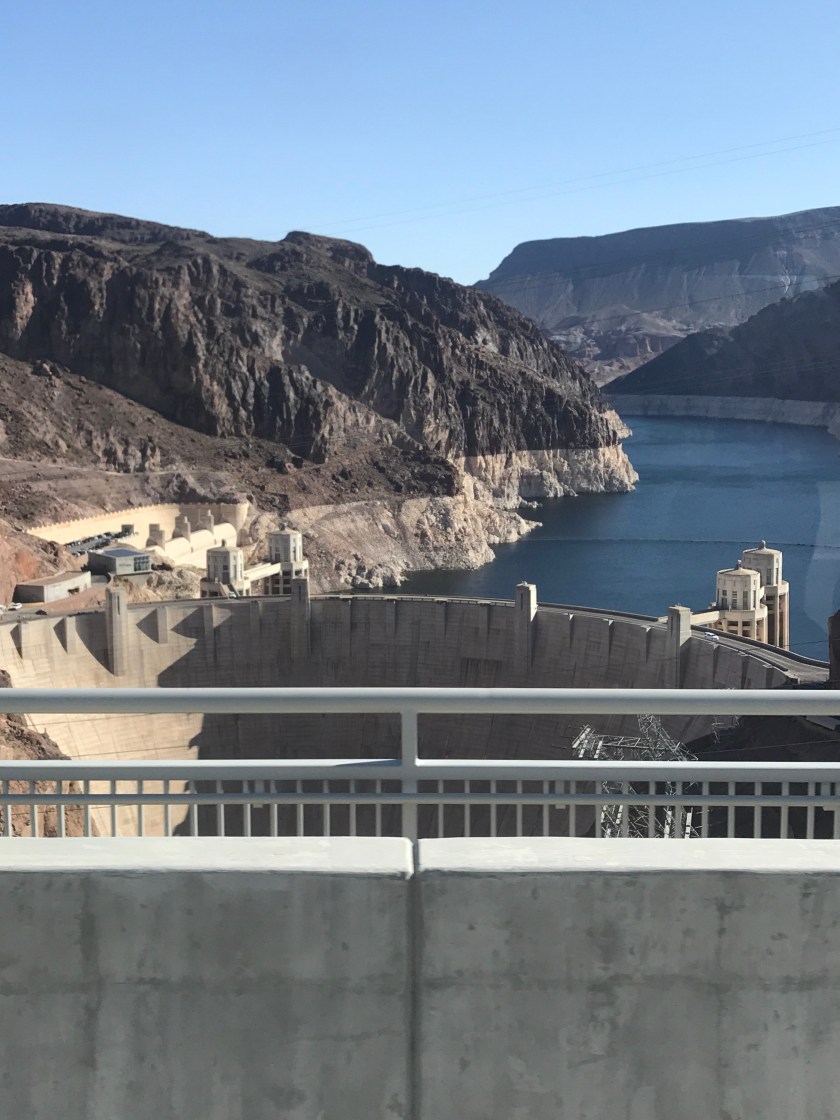
We decided Beatty RV Park in Nevada would be the perfect jumping off point for our explorations. On our way to Beatty, we passed the Hoover Dam…
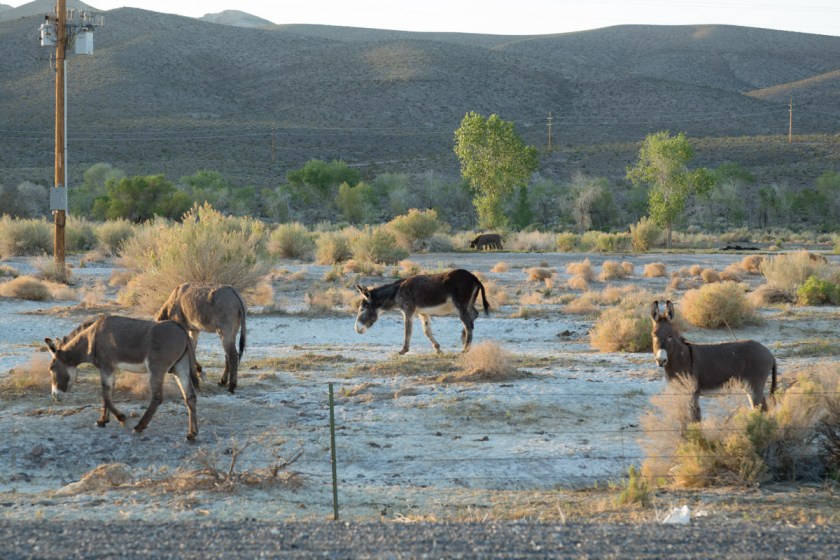
And drove through Las Vegas. It was noon when we pulled into the park. We got set up in our site and headed into town, actually, to be completely honest, we were looking for a liquor store. The camp host told us we could probably buy liquor at the casino. My first thought was, yeah, what would THAT cost. After we drove around town a bit, we headed to the Stagecoach Hotel and Casino. Just for fun, we put $6.00 (big spenders, right?) into the one-armed-bandit and hit on the 3rd pull. Woohoo. Let’s cash out of this machine! And so it went. A few bucks here, a few bucks there and at the end of the afternoon, we were up enough to cover the cost of the bottle, which wasn’t as expensive as I imagined. When we got back to Waldo, there were wild burros across the street, which I thought was really neat…
I can just hear the burro, “What, haven’t you ever seen an ass before?”
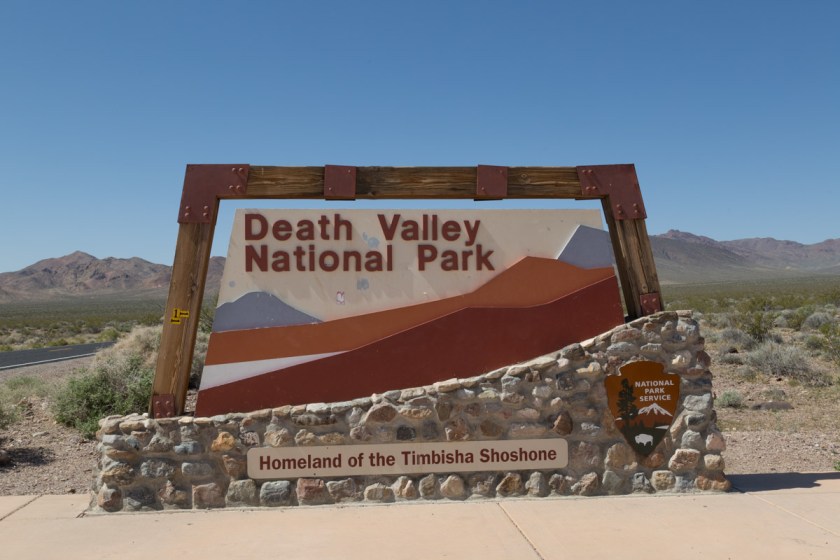
The next day, we headed into Death Valley…
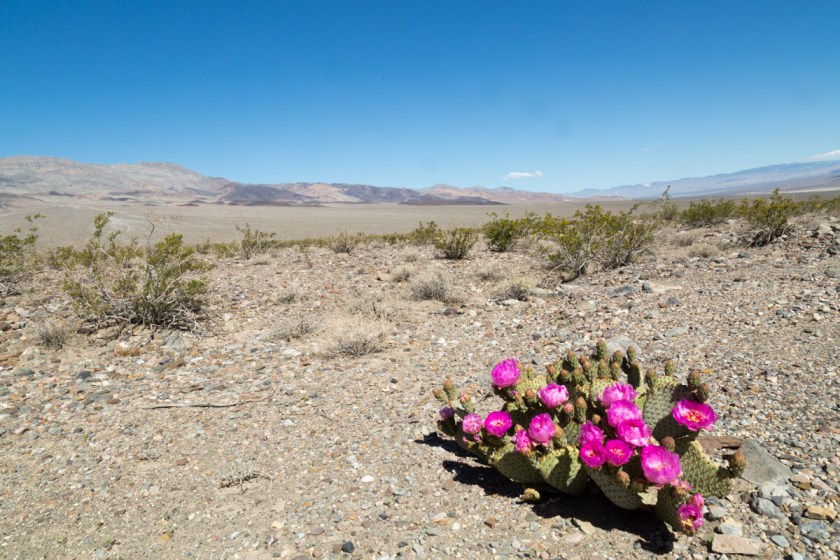
Once we passed through Hell’s Gate, the temperature started to climb. It was 58 degrees in Beatty and 75 degrees on the valley floor. The wind had been kicking up for days and it was really noticeable in the valley. I knew it would be hard to get great pictures of the overall landscape because of the haze…
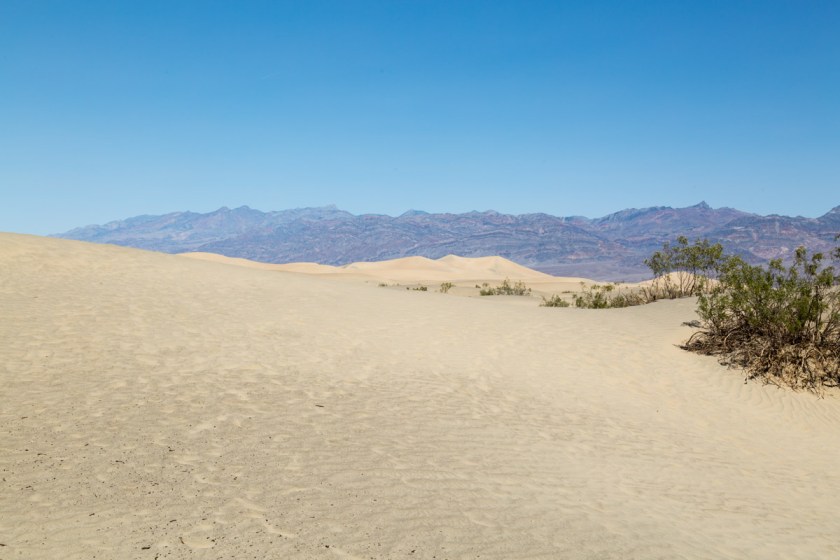
Mesquite Flat Sand Dunes
So, I tried to focus on the smaller scenes…
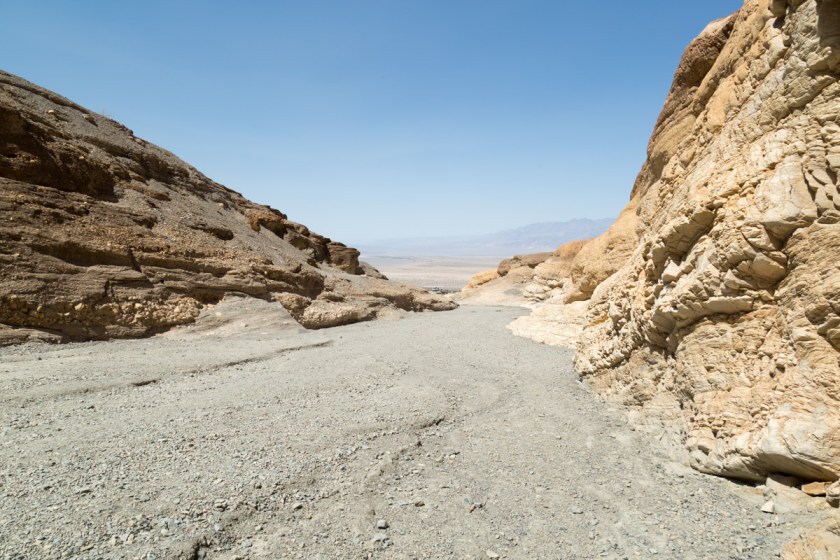
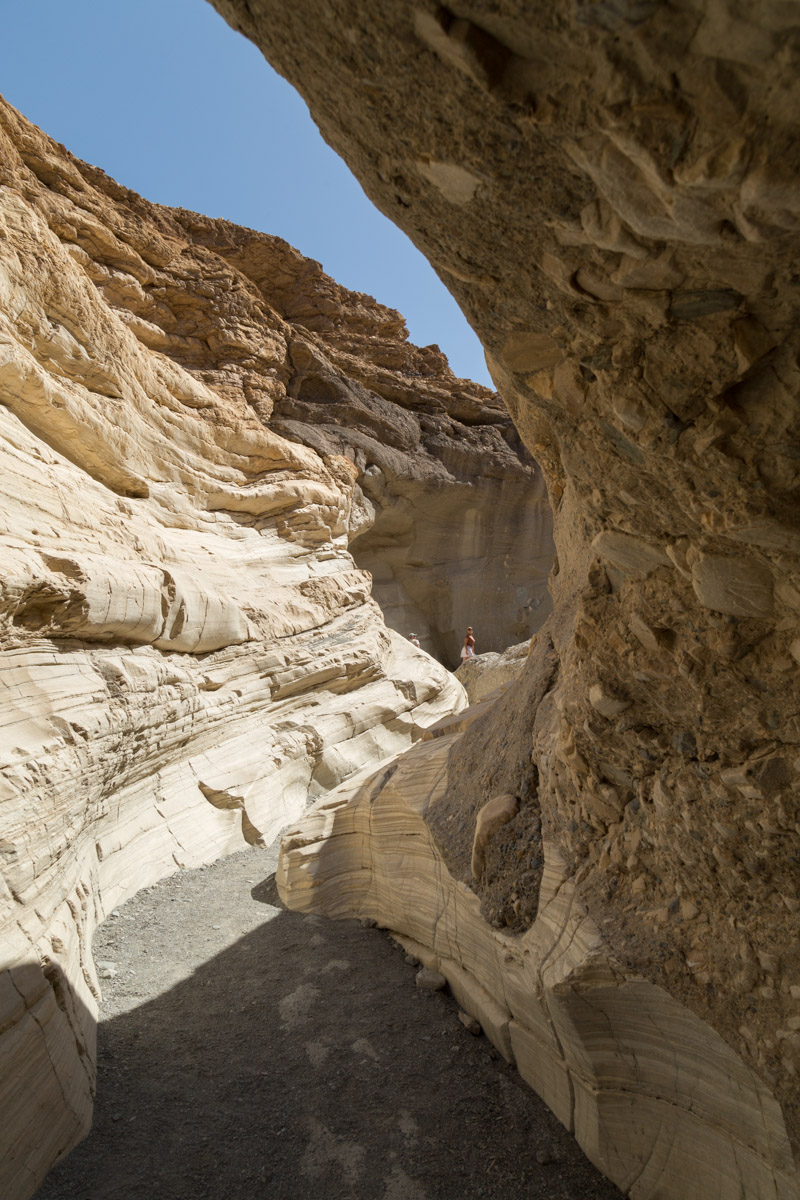
Our next stop was Mosaic Canyon, a 4 mile round trip through narrow slot canyons and polished rock walls…
Looking back toward the parking areaThe canyon walls, smoothed by rushing watersSteve getting a picture of the landscape
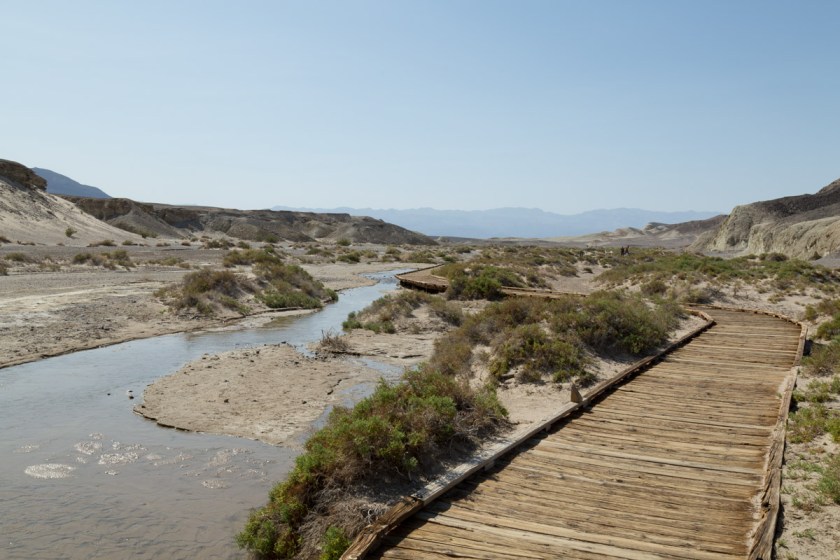
From there, we walked the Salt Creek Interpretative Trail.
Since it was only April, there was still plenty of water flowing. The water is 4x saltier than the ocean. In spite of that, it is home to the Salt Creek pupfish…
Not a great picture, but you can see several pupfish
April is the beginning of mating season and the males were a beautiful shade of blue. As we were walking along, I could have sworn I saw a gorilla face in the mountains…
Do you see a gorilla or was I imagining it?
I was in sensory overload, it’s hard to take in all the naked beauty at once.
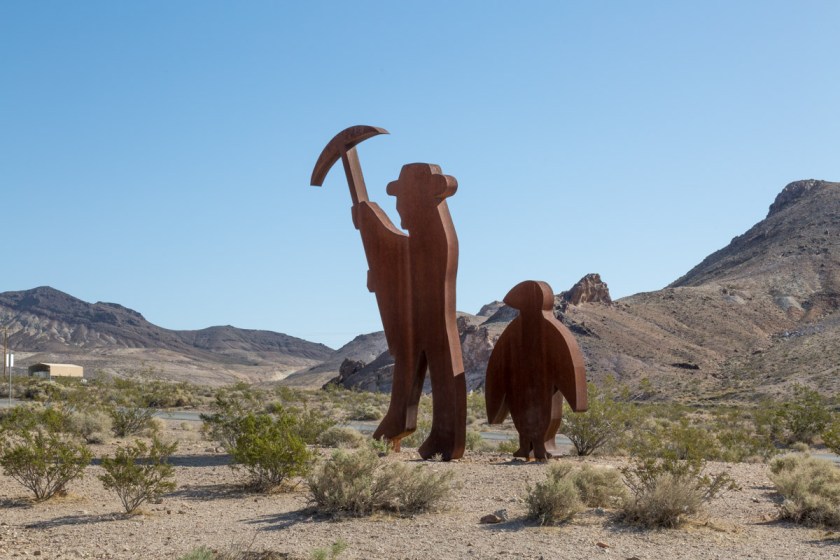
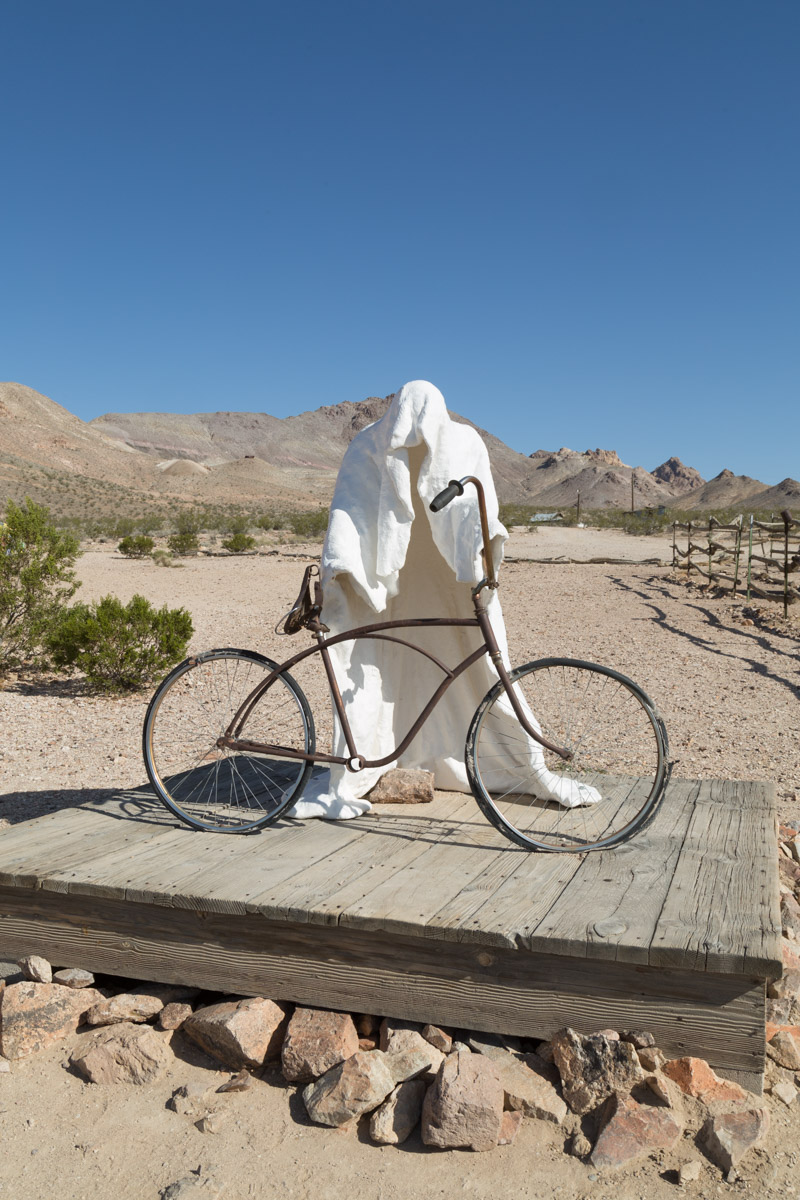
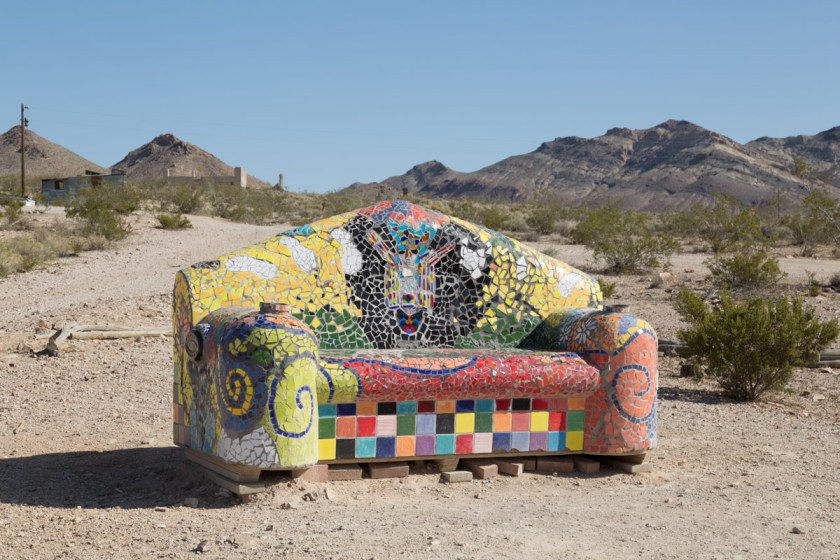
It was several days before we got back to exploring. Before you get into Death Valley, there are 2 must see places. The first is the Goldwater Open Air Museum. It seems a strange place for an art museum, in the middle of nowhere, but it is definitely worth the stop…
Fred Bervoets’sOde to Shorty Charles Albert Szukalski‘s Ghost RiderCharles Albert Szukalski‘s TheLast SupperA very large metal origami craneDr. Hugo Heyrman‘s Lady Desert The Venus of NevadaOnny Huisink’s The Beauty of DecaySofie Siegmann‘s Sit Here
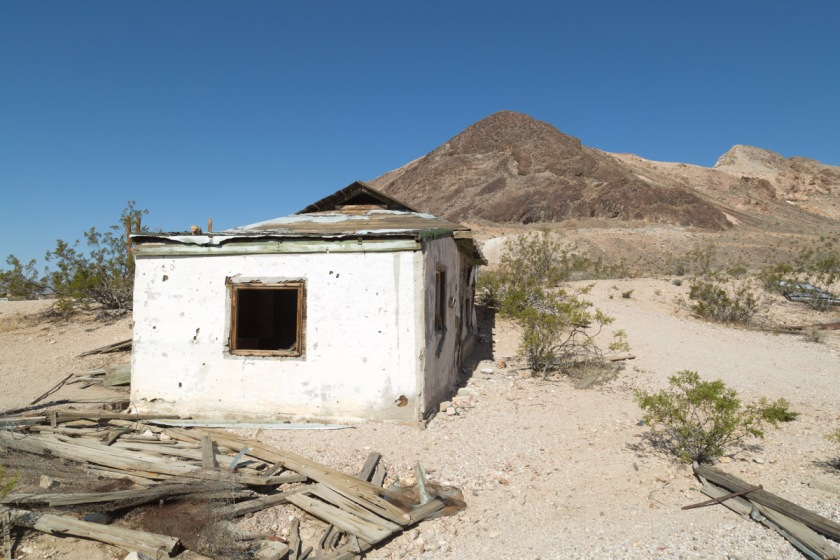
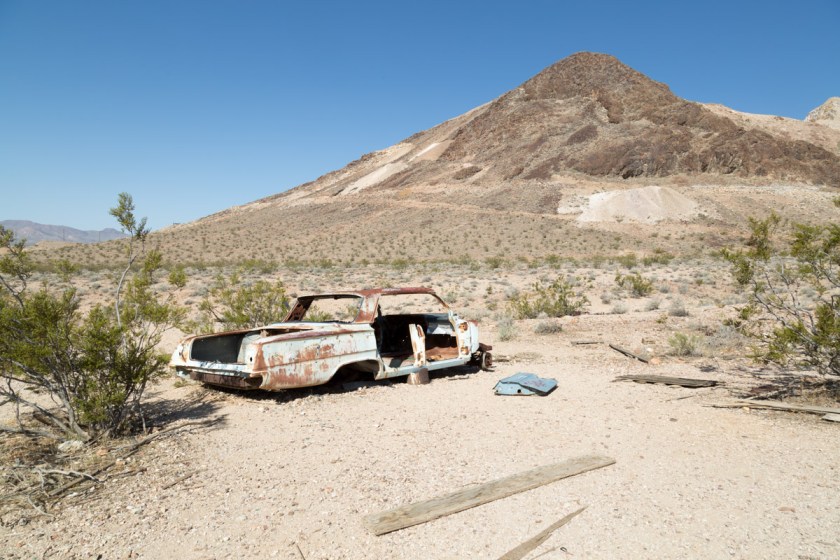
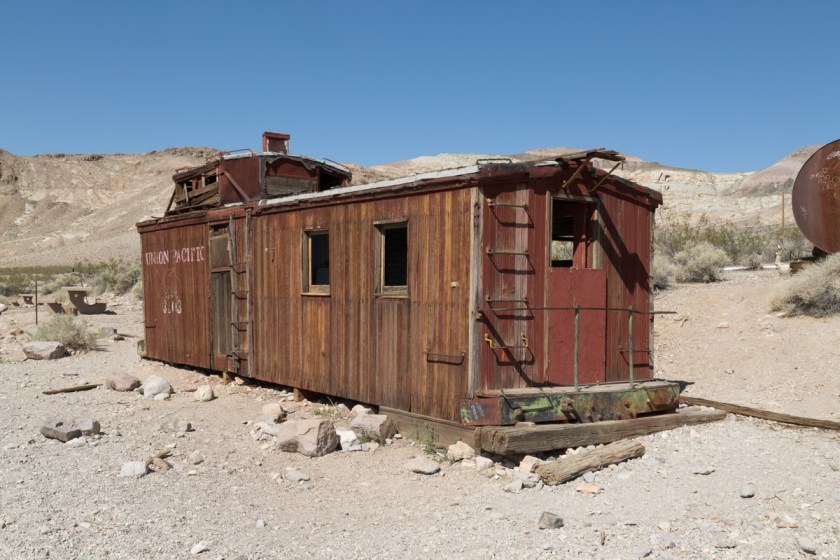
Just passed the museum we discovered several abandon homes and vehicles…
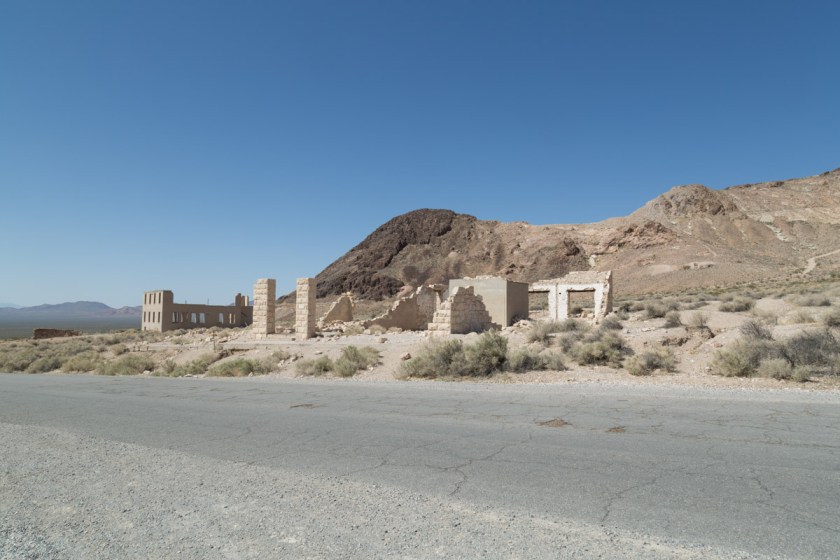
This was a prelude to the ghost town of Rhyolite. The town boomed into existence in 1904 and had burnt itself out by 1916. Remains of several of the buildings give us an idea what town was like in its heyday…
I thought one of the neatest buildings was Tom Kelly’s bottle house…
Despite the fact electricity to the town had been shut off in 1916, the last tenets of the house lived there until 1969. Tommy Thompson and his family added miniature houses to the property…
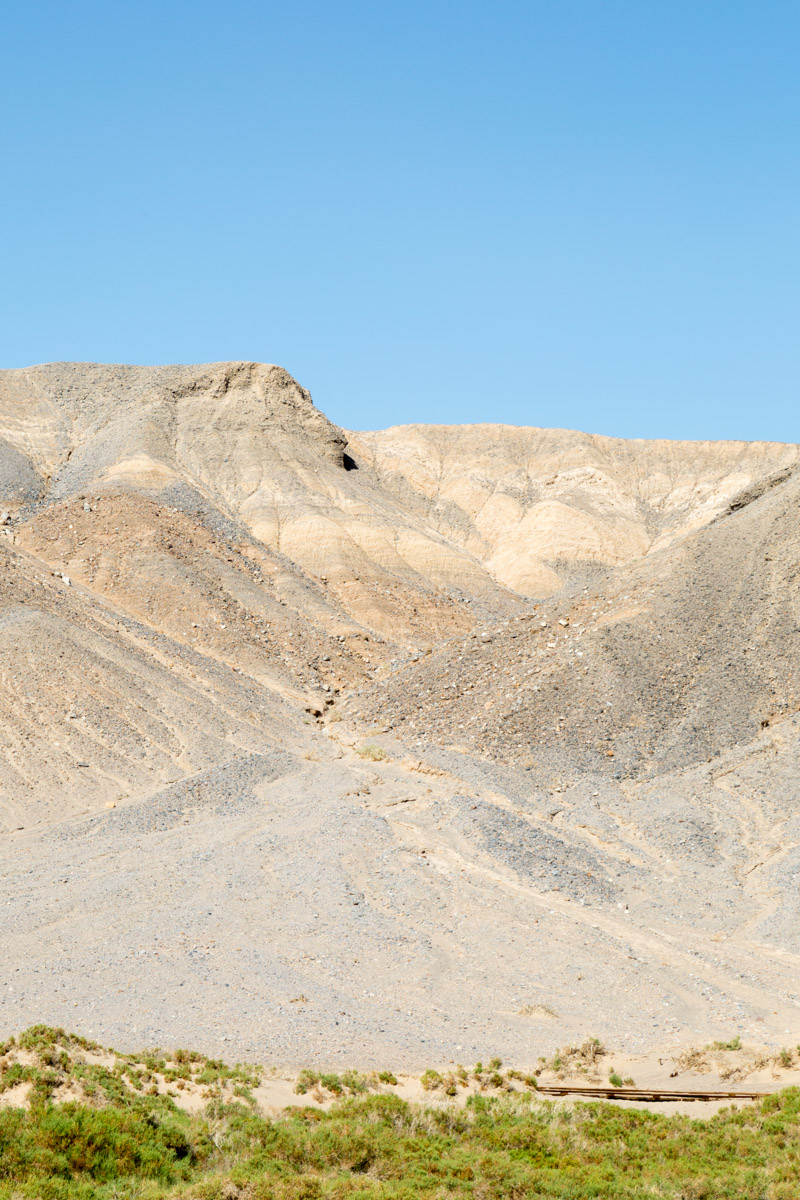
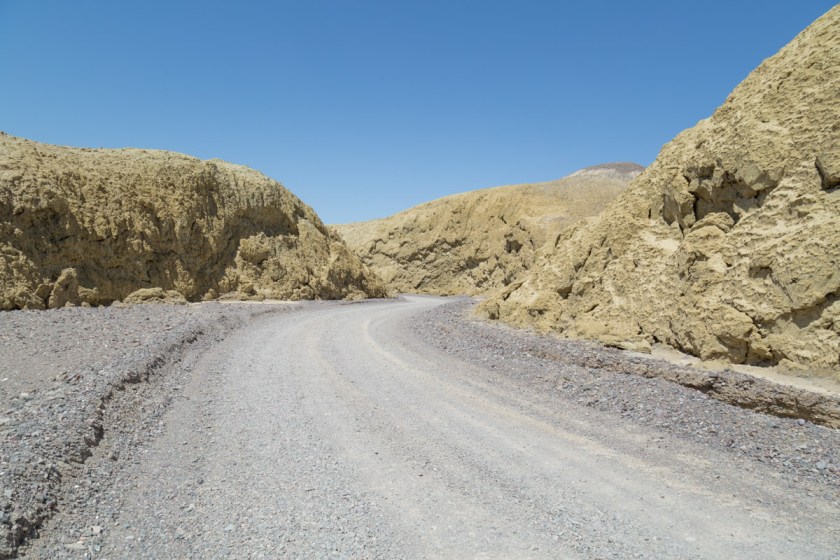
From Rhyolite, we headed back into Death Valley. We drove along Mustard Canyon Road…
Since the Petrified Forest National Park wasn’t on the list of places we planned to visit, I hadn’t done any research. Sometimes this works out well, because everything is a surprise. For one thing, I didn’t know Arizona’s Painted Desert is within the 150,000 acres which make up the park.
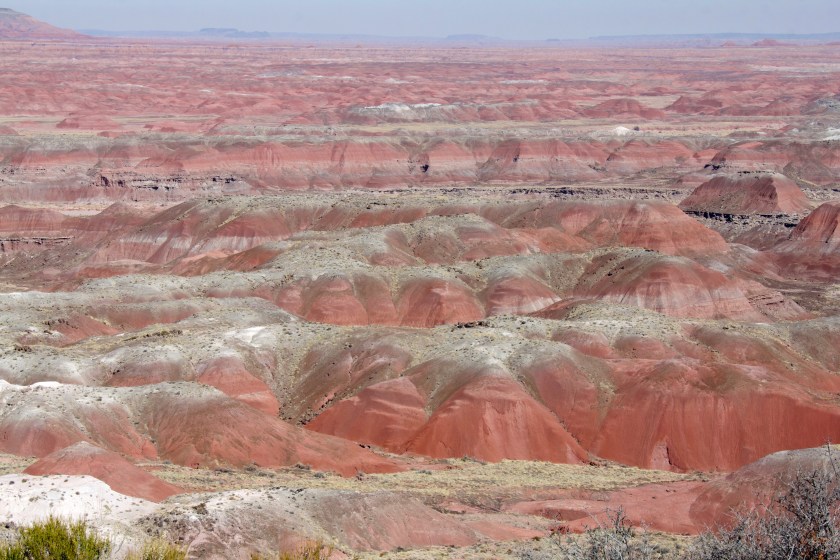
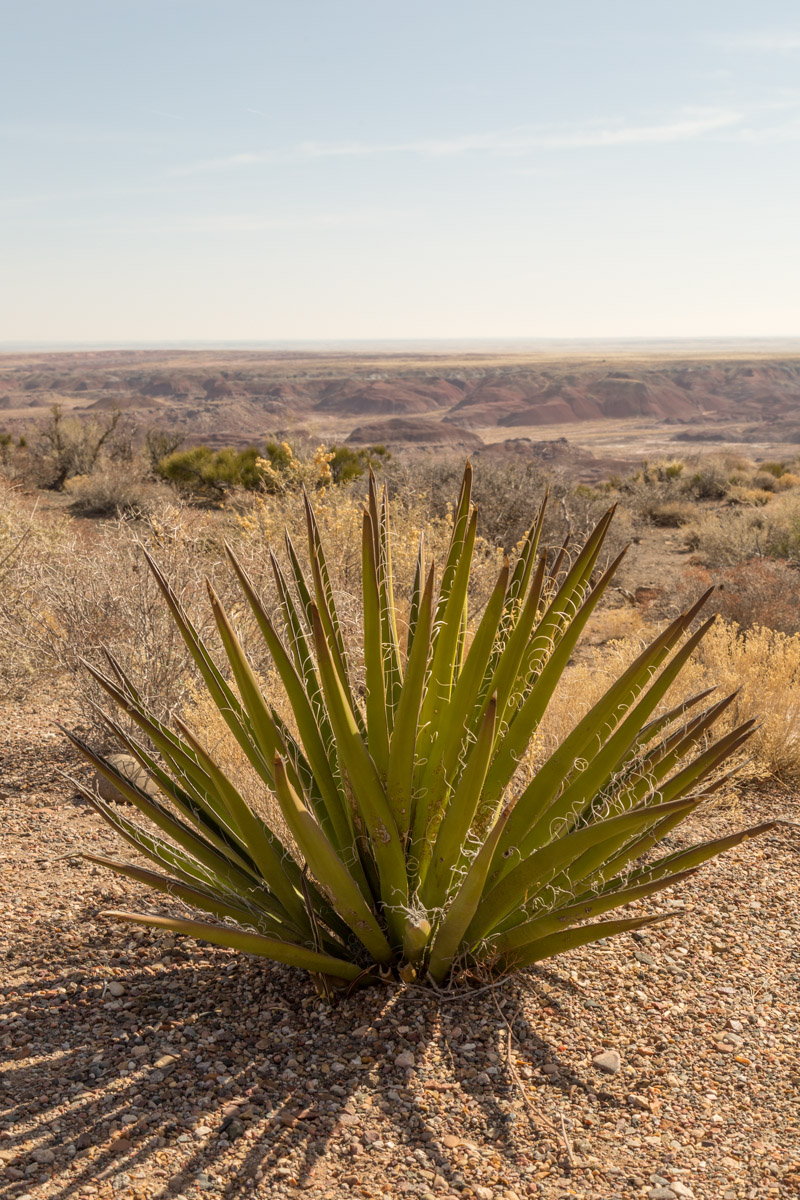
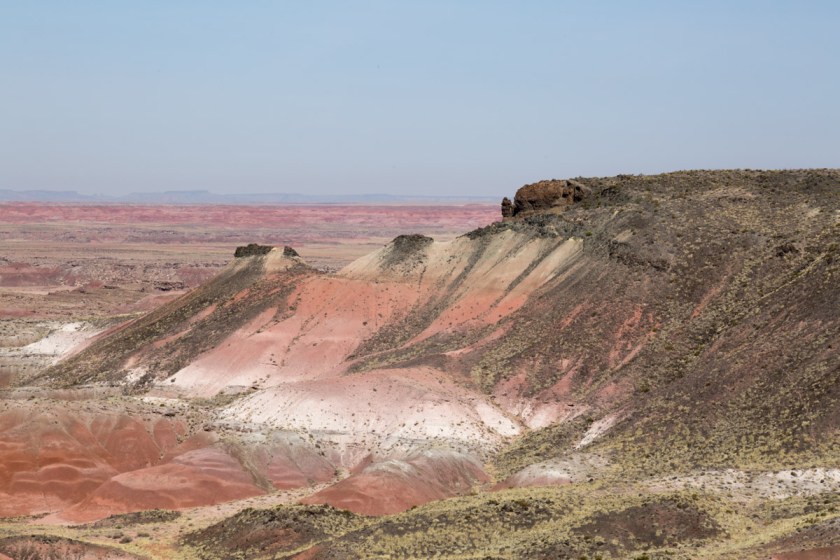
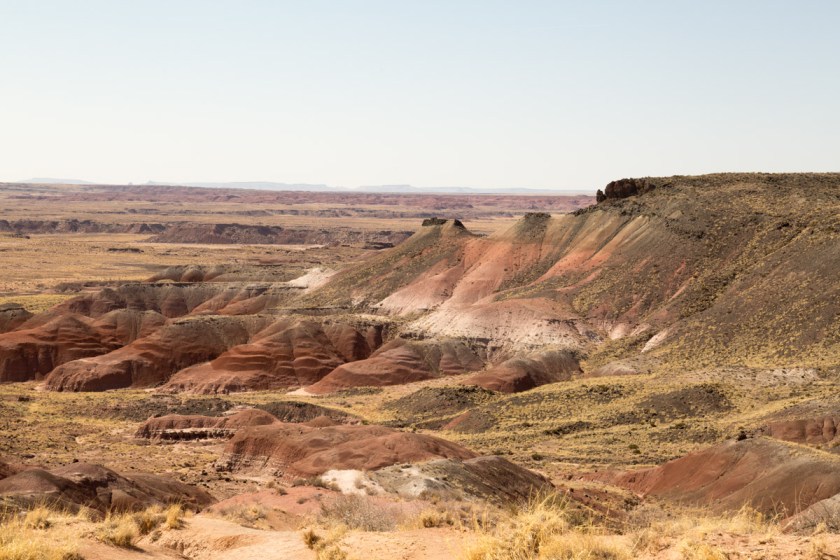
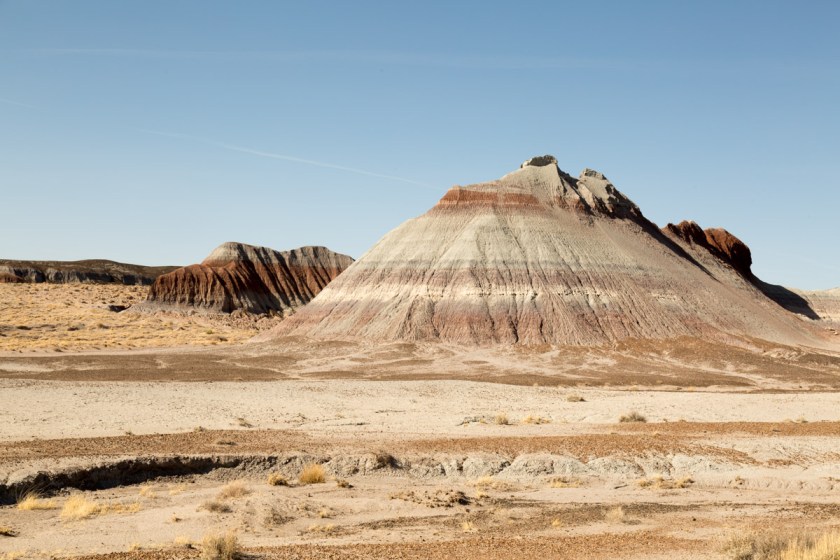
We entered the park on the north end and drove the 28 mile road through the park. Our first treat was the painted desert…
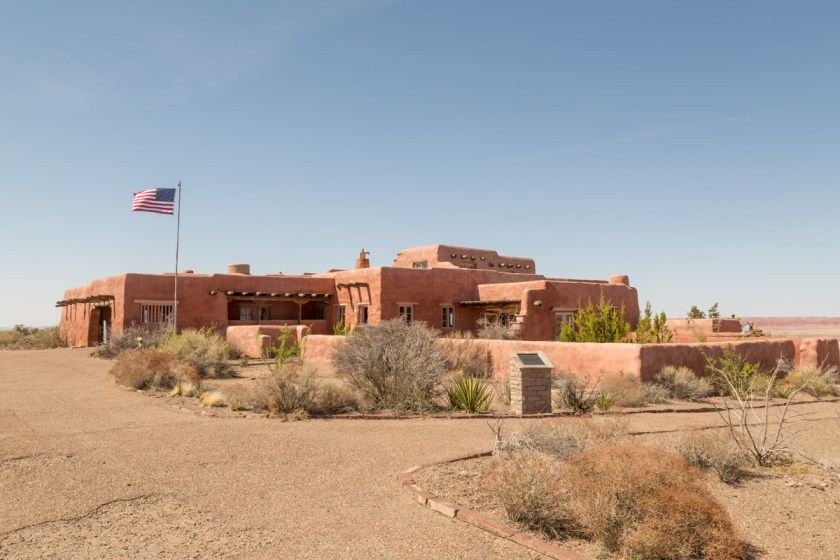
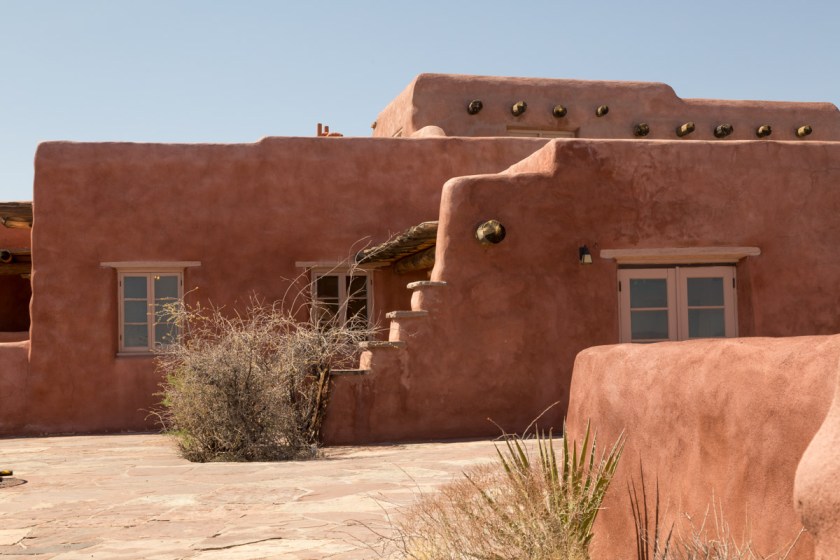
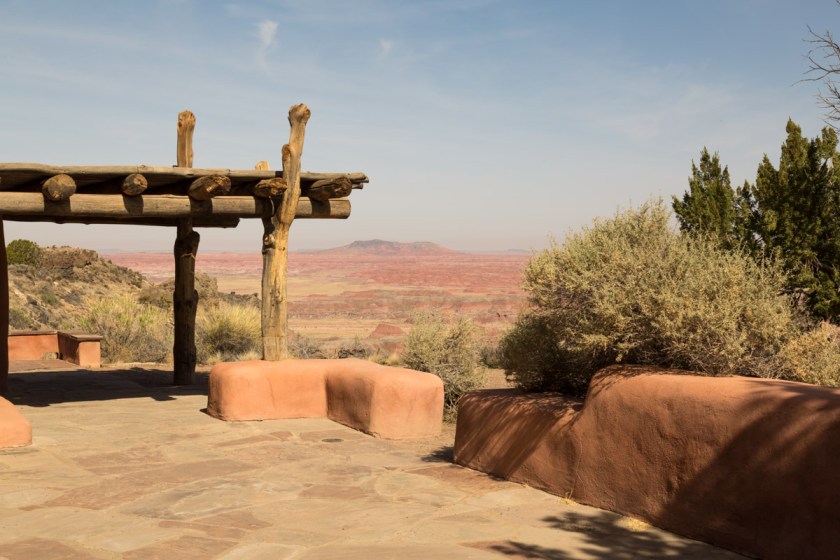
It is hard to give a sense of scale and these pictures don’t do justice to the beauty. We stopped at the Painted Desert Inn and took in the sights…
I love how it blends in with the scenery
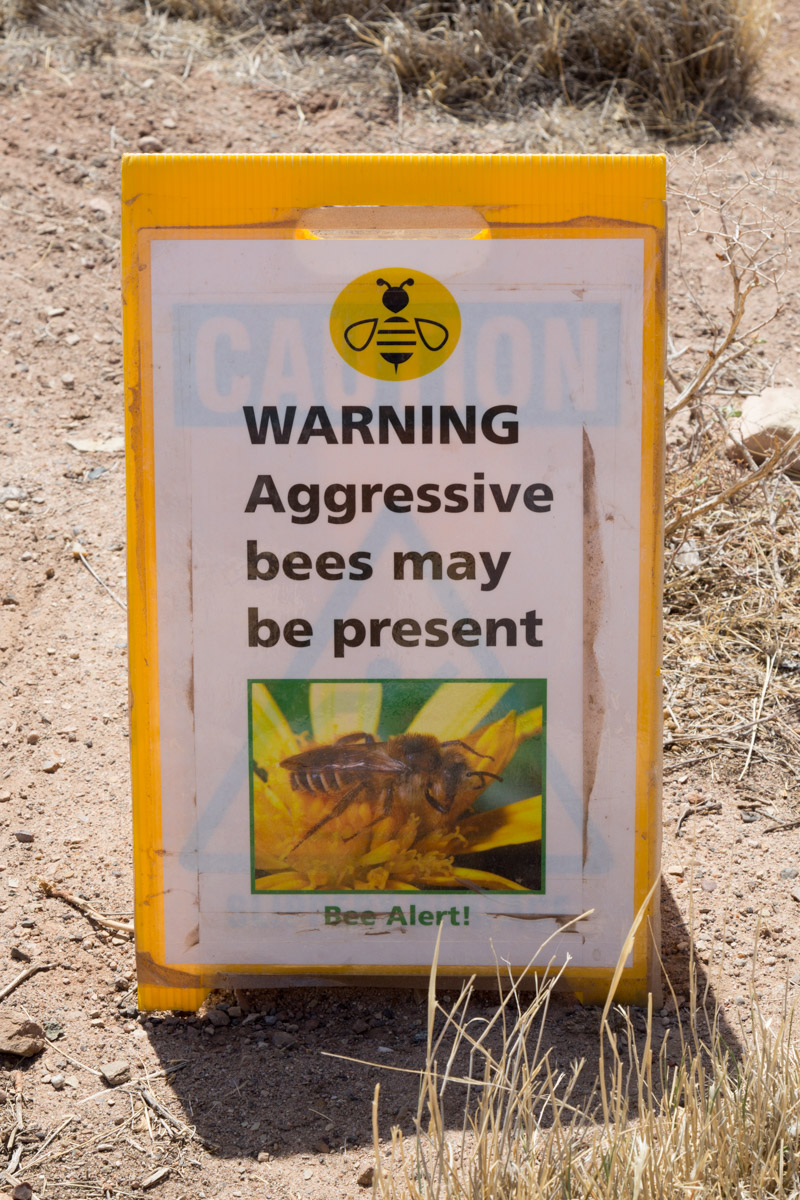
You do not want to fall on one of these!
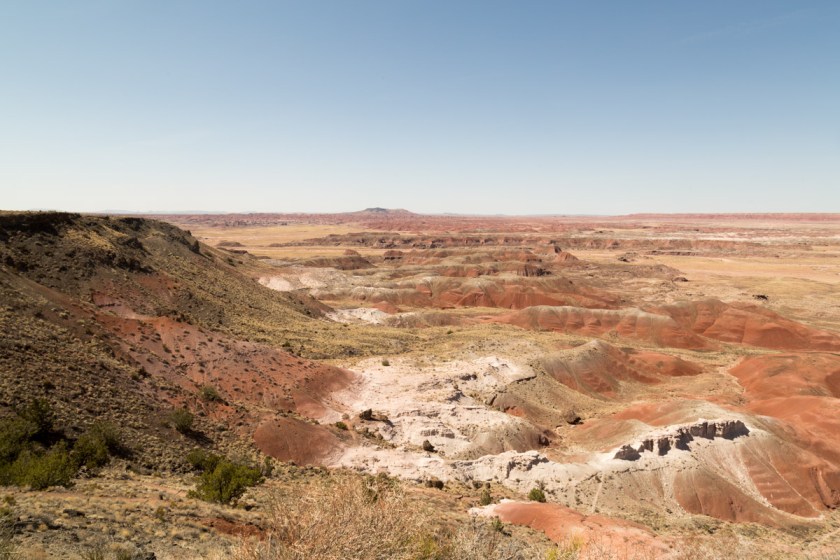
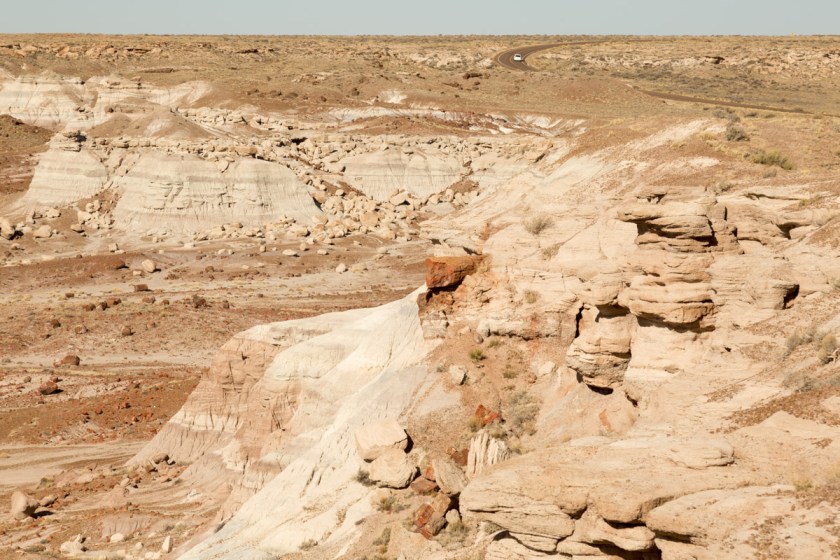
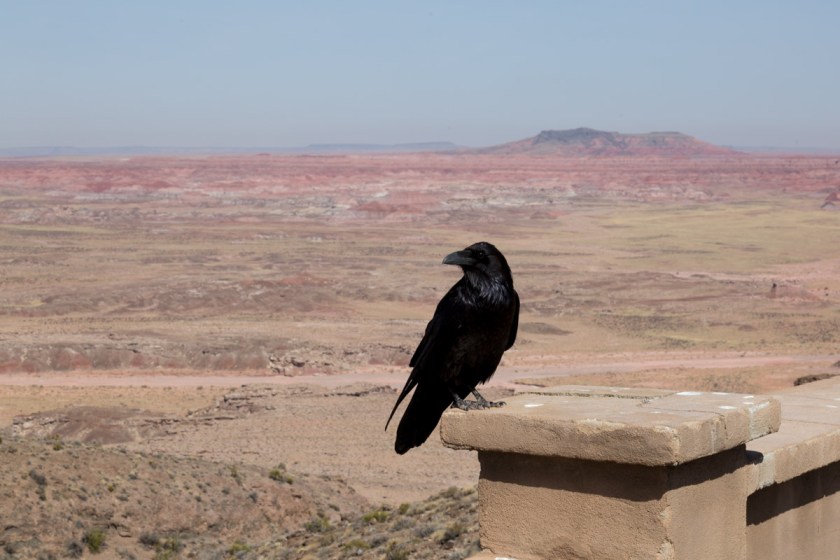
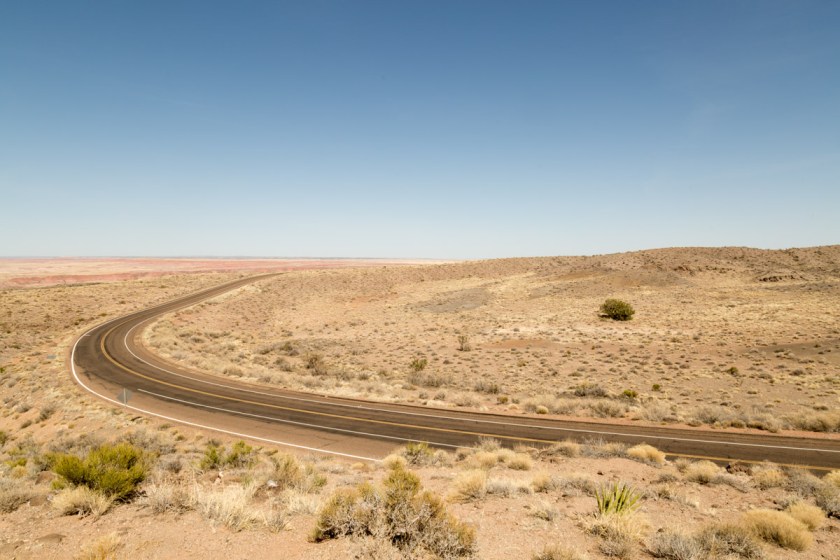
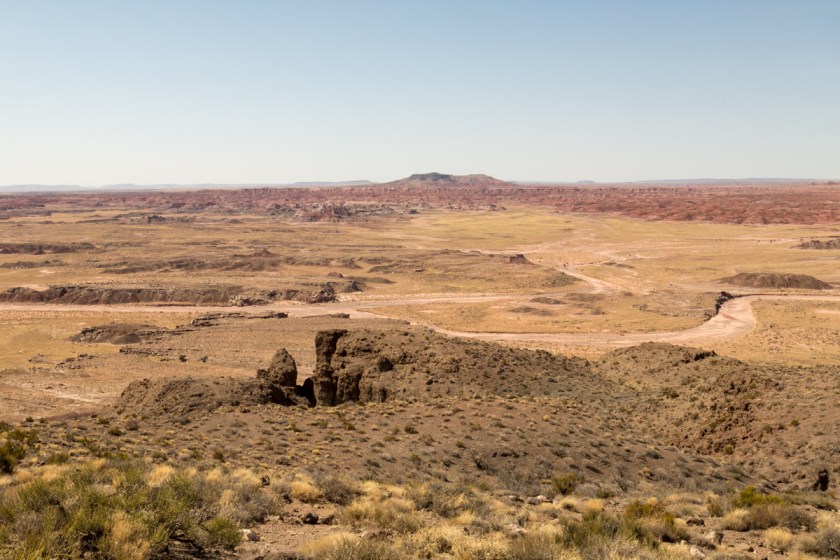
We stopped at nearly all of the scenic overlooks.
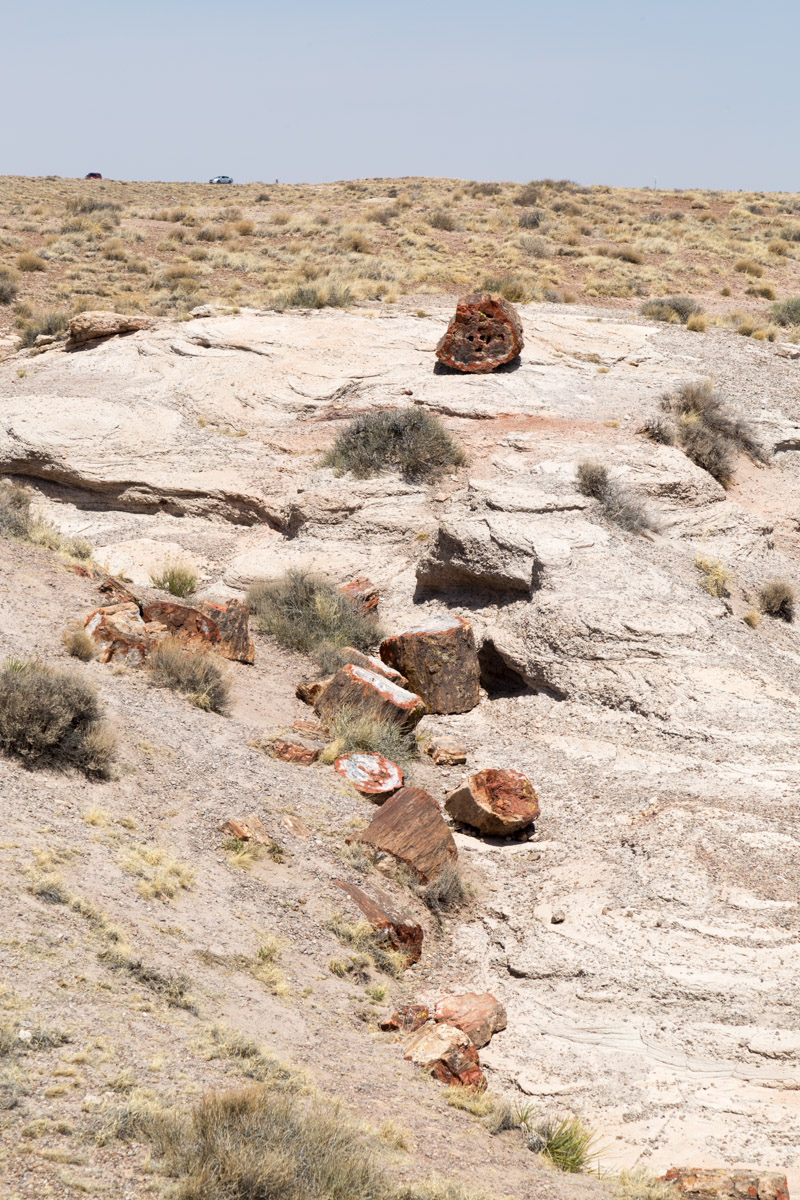
Notice the white car near the top on the right
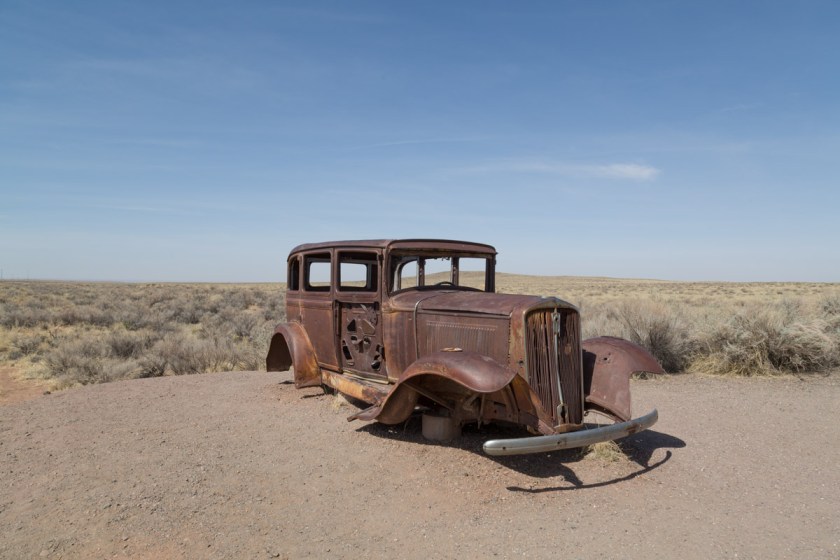
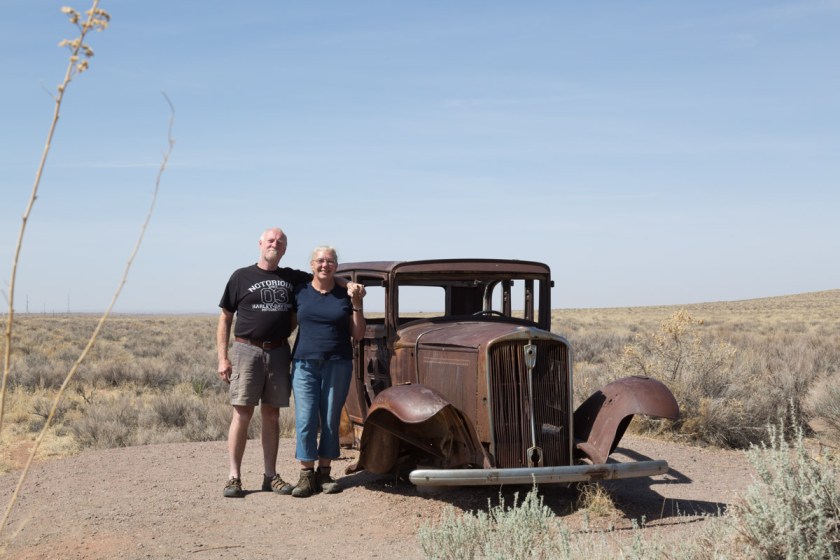
We couldn’t resist stopping where Route 66 used to be…
“Our obligatory selfie to prove we were there”
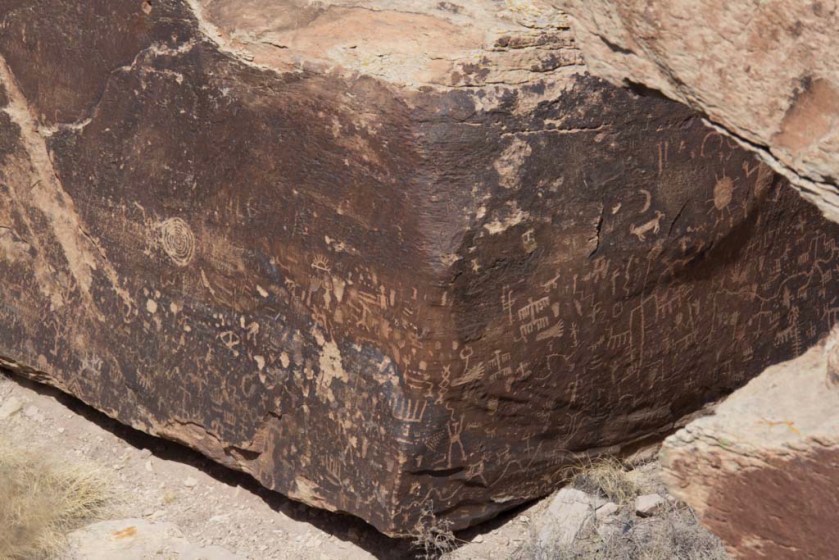
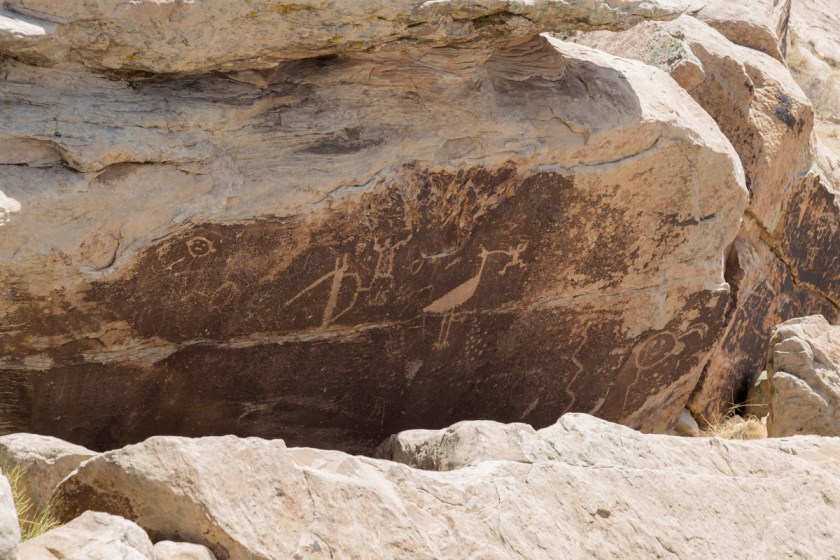
Another stop was at Newspaper Rock, there are over 650 petroglyphs in the area…
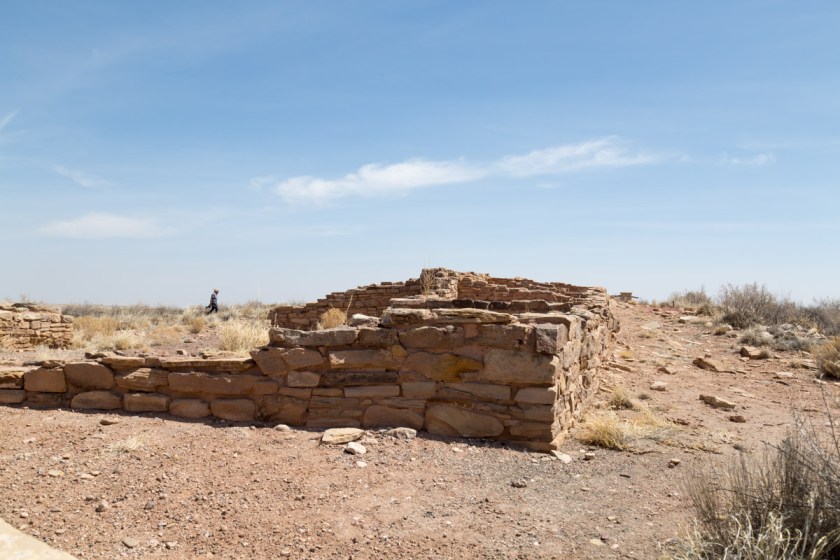
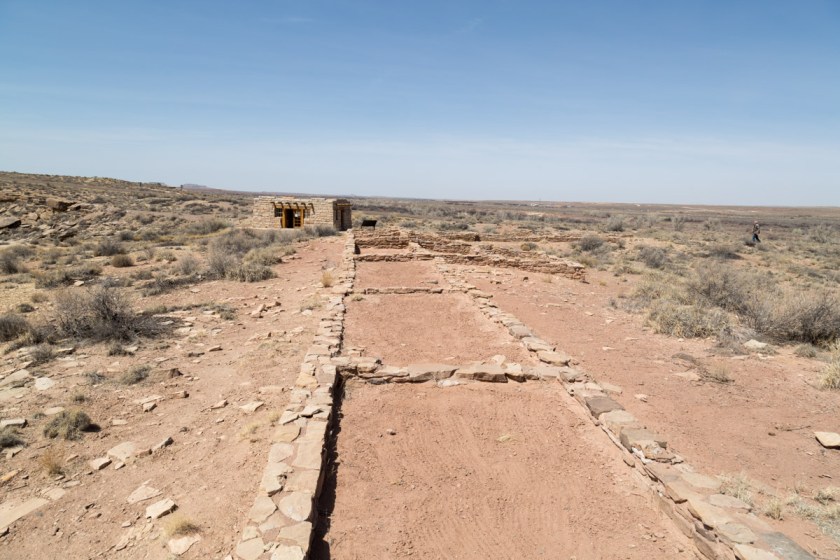
Imagine a time when you wanted to leave a message for another traveler and the only way to do it was to carve it into the rocks using symbols. There is no “dictionary” for the symbols, so we can only guess as to all of their meanings. Another stop was the Puerco Pueblo. The remains of quite a few building mark the place where as many as 200 people might have lived. There are also petroglyphs here…
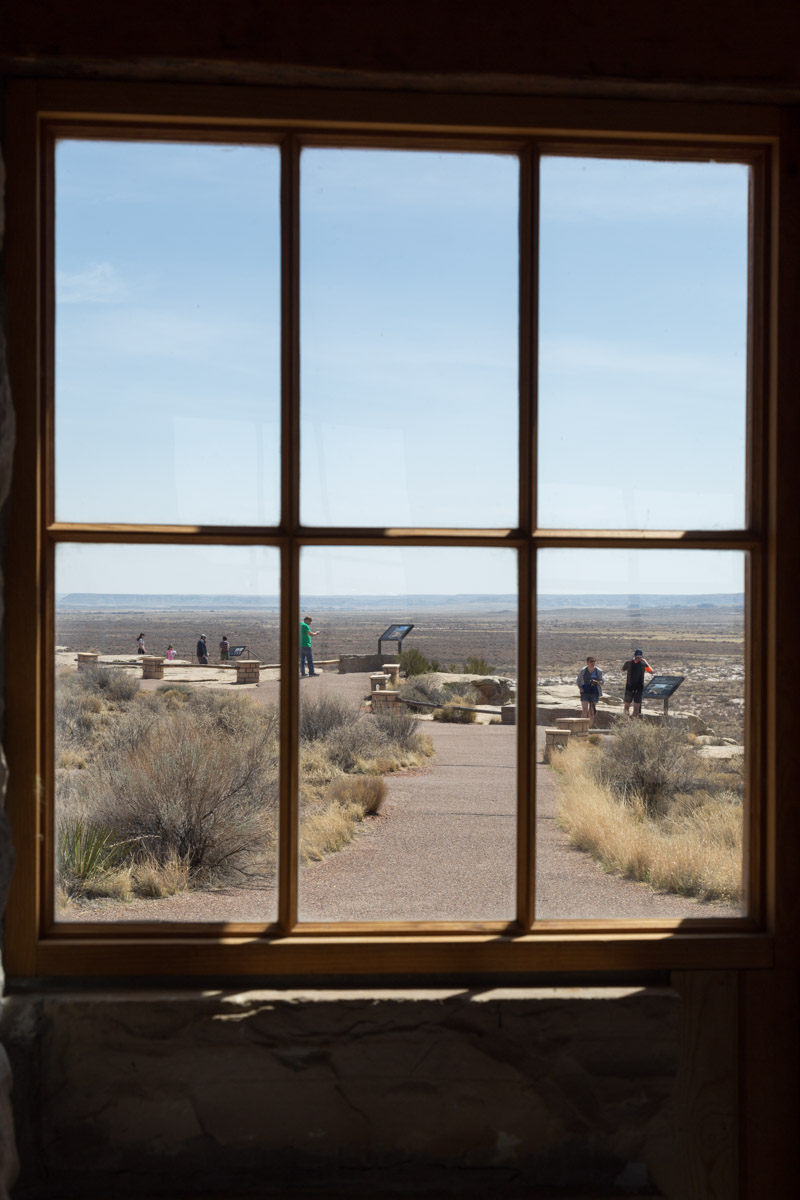
The building in the background houses several exhibits about the history and culture of the Puebloan people
When I look at this set, one of the things I see is a bird eating a frog, other people see a stork bringing a baby. What do you think?
And I was worried about rattlesnakesNear the beginning of Blue Mesa
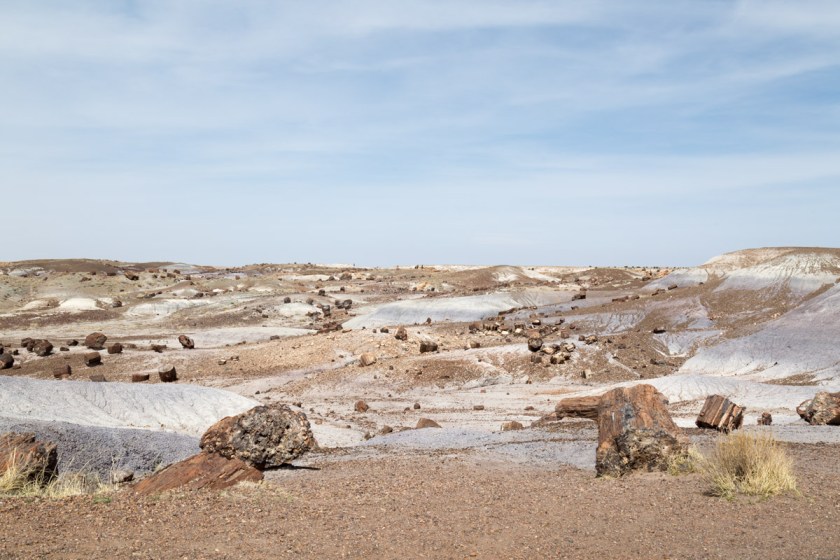
We were beginning to see more and more pieces of petrified wood…
We were nearly at the end of the 28 mile road when I caught sight of a pronghorn antelope. I had been hoping to see one, but had almost given up. Steve got this shot.
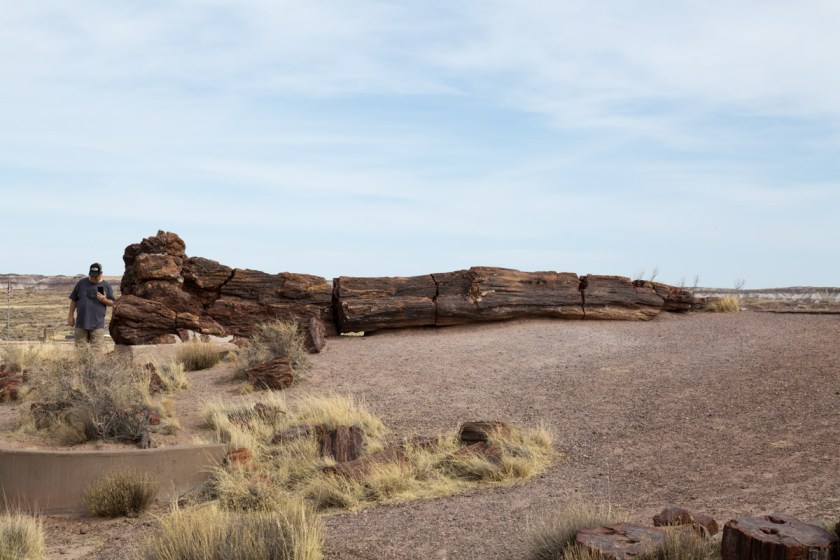
At the south end of the park is another visitor center with a walking trail passing gigantic petrified logs…
The man in the pictures gives you an idea of the size
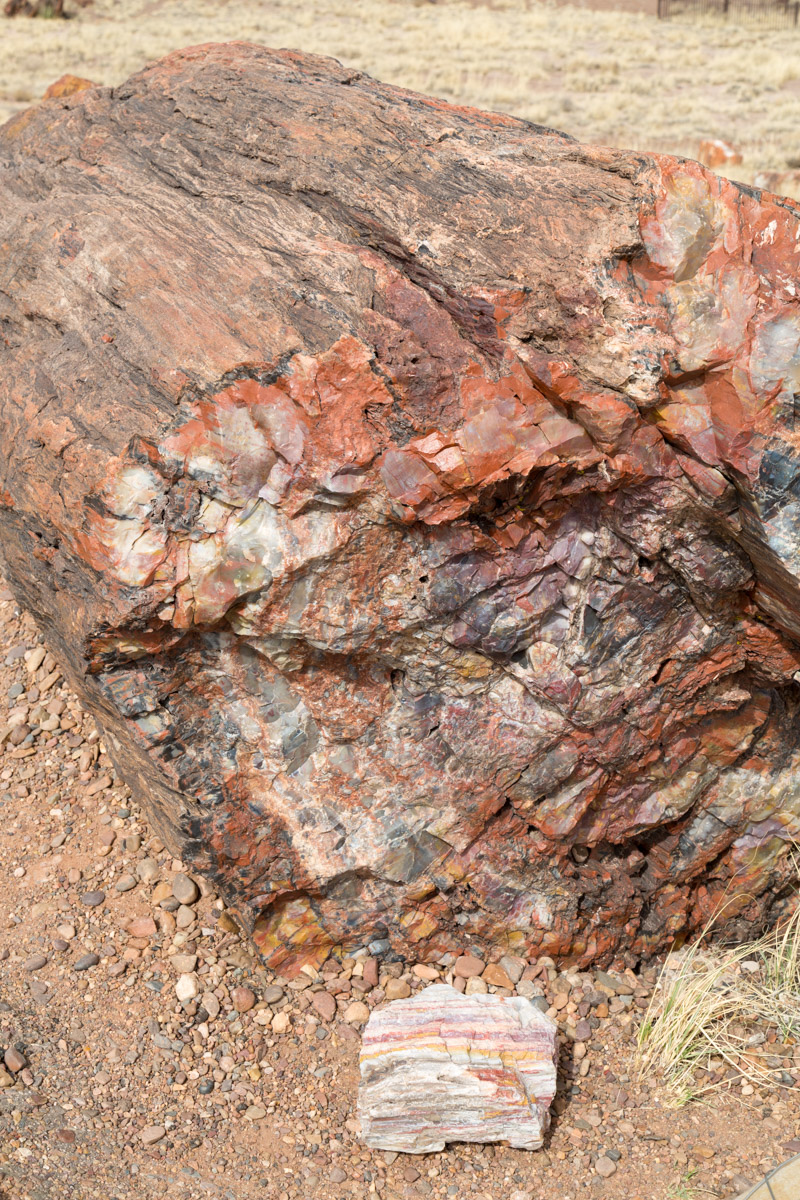
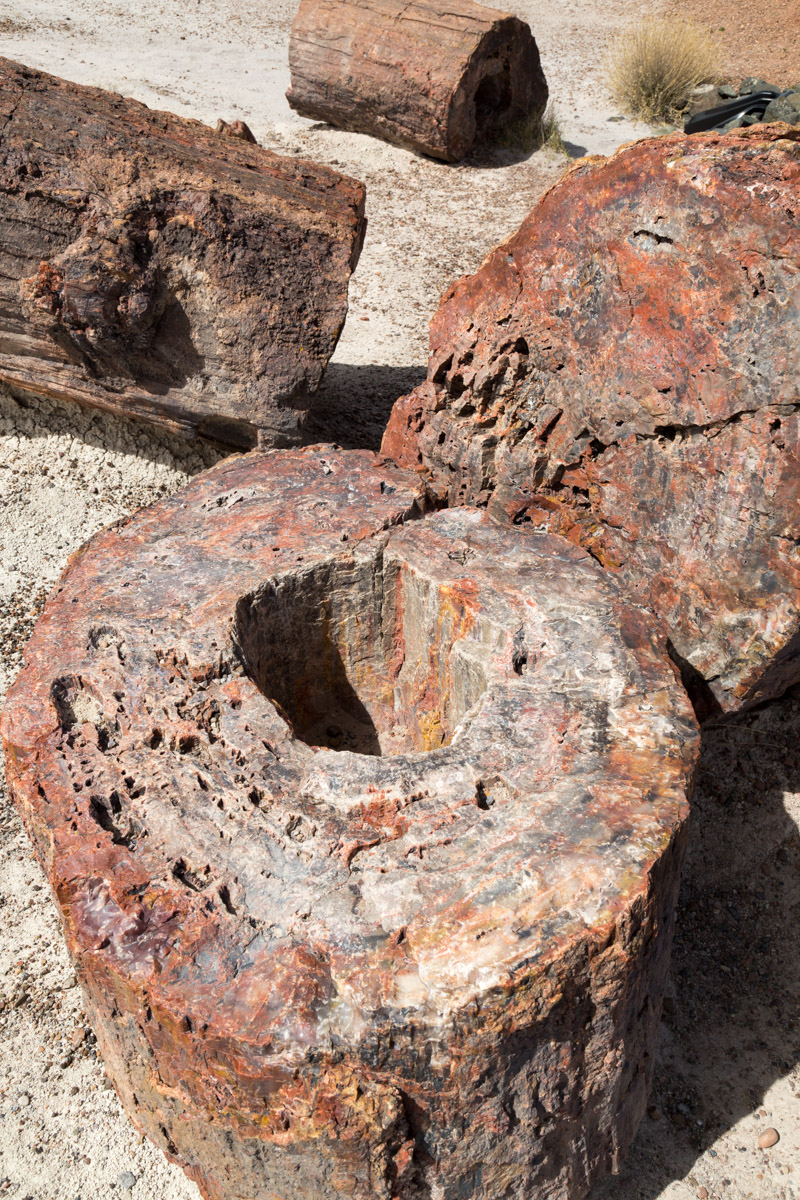
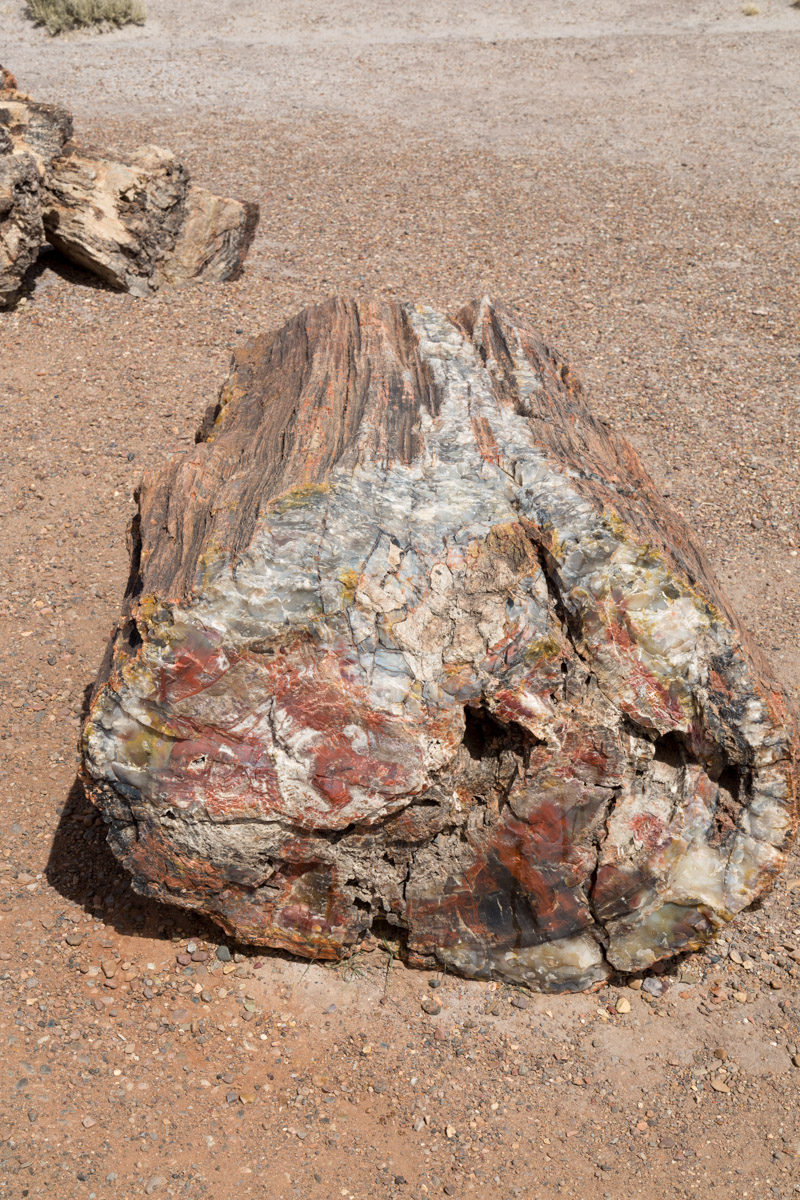
What amazed me the most about the logs was the variety of colors…
Have you ever visited the Petrified Forest? The Painted Desert?
































 The Wandering RVer